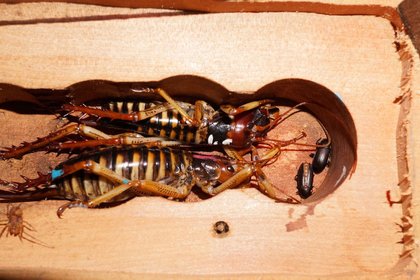
Two tree w膿t膩 inside a refuge box
A study by 暴风资源 biologists, which was recently published in the New Zealand Journal of Zoology, found that half of the tree w膿t膩 hiding inside refuge-boxes during the day returned home to the same box each night.
Professor Mary Morgan-Richards from the School of Natural Sciences says site fidelity is common in large animals but not often recorded for insects.
Previously, documenting changes in insect populations in forest reserves usually required killing large numbers of specimens so sampling could be replicated, with specimens being stored, sorted, identified, and counted.
鈥淭his discovery means that it will be easier to monitor w膿t膩 because we know the same individual will return to their same daytime refuge over many months,鈥� Professor Morgan-Richards says.
Tree w膿ta虅 are an important component of New Zealand forest-ecosystems as they are a food source for native birds, bats and reptiles.
The monitoring of w膿t膩 and other species is an important step in assessing the success of programmes which have reduced or removed invasive mammal species from forest habitats around New Zealand in order to restore forest ecosystems.
By marking each tree w膿t膩 with a unique colour and pattern combination of nail-polish, the researchers discovered that males and females of all ages return home to the same refuge, which in this instance were wooden artificial tree-cavity-boxes (we虅ta虅 galleries) fixed to tree trunks. At night the w膿t膩 are out in the trees eating leaves, by day they shelter in the same refuge.
Some w膿t膩 were found living in the same w膿t膩 box for six or seven months.
"This is great news that these individual w膿t膩 were surviving in the forest, avoiding rats and morepork for half a year or more,鈥� says Professor Morgan-Richards.
Professor Steve Trewick, Dr Jonathan Godfrey, and graduate student Amy McKenzie were also involved in the research.
The researchers鈥� recommendations for w膿t膩 monitoring are to place artificial galleries on tree trunks 50 - 100 metres apart, set up 50 or more artificial galleries, and record w膿t膩 occupancy at the same time of year, once a year.
More news
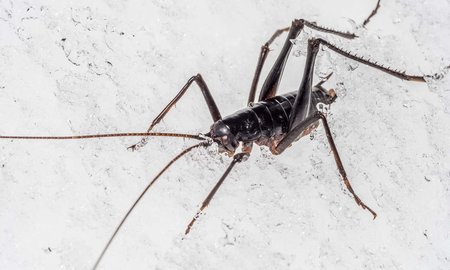
Researchers discover six new species of New Zealand w膿t膩
Six new species and three new subspecies of alpine cave w膿t膩 from the southern regions of the South Island have been identified.
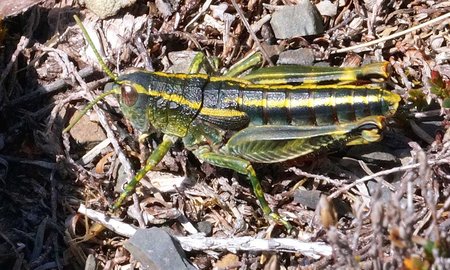
Grasshoppers show how alpine fauna will be lost as global temperatures rise
New research indicates anthropogenic climate change will result in a quarter of Aotearoa New Zealand's alpine grasshopper species becoming extinct.