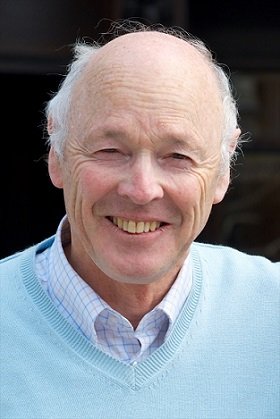
John Davidson interviewed by Anastasia Bakogianni
AB: John, I'm familiar with your wonderful work as an academic, especially the pioneering work you did in the field of classical reception, but the subject for our interview is your poetry. Tell us more.
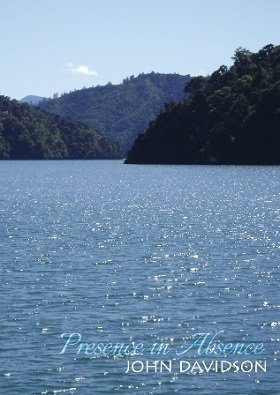
JD: I began writing poetry seriously when I was a student in the 1960s. In the 1970s I had a number of poems published in literary journals, and towards the end of the decade was thinking about compiling a collection. Before I could gather enough material, however, the words for new poems simply didn鈥檛 come, partly because of my personal circumstances at the time. The result was that I only wrote a handful of poems over the next thirty years. At about the time that I retired from my academic post at Victoria University of Wellington in 2010, the words suddenly started to materialize again in my head, and I have been writing poetry consistently since then. My first collection 鈥楶resence in Absence鈥� (Steele Roberts Aotearoa) was published in 2013, and was followed by 鈥楽napshots of Berlin鈥� (Goethe-Institut New Zealand, 2014, with Matthias Seidenst眉cker), 鈥楽oundings of Hellas鈥� (Steele Roberts Aotearoa, 2015), and 鈥榁isions of Valhalla: A Poetic Tribute to Richard Wagner鈥� (Steele Roberts Aotearoa, 2016).
AB: I'm sure you will be expecting my next question. Are there any classical echoes in your poetry and if so, how central are they?
JD: In my poetry of the 1960s and 1970s, and again when I returned to writing in 2010, I tended to avoid making references to classical literature or engaging poetically with ancient authors. This was because it seemed to me that since I was a practicing academic in the field of Classics, such an approach would be seen as too forced, artificial, obvious and, if you like, "academic". I did, however, break this rule of thumb in a number of poems, notably in 鈥楨lpenor鈥�, which was published in the literary journal Landfall in 2012 and subsequently collected in 鈥楶resence and Absence鈥�. This poem is about a hypothetical New Zealand sportsman, whether rugby player, rower, or whatever, whose decline, as he aged, is seen in terms of the fall of the drunken Elpenor from the roof of Circe鈥檚 palace. Its concluding lines are:
One day, heady
with the fumes of declining
adulation, he forgot the
distance to the common level,
overstepped the silken
ladder that climbs
down from dreams and
tumbled into void.
No one remembers him now.
The irony built into the last line here is that whereas many at one time famous sportsmen are quickly forgotten, Elpenor has been assured of everlasting memory because of Homer.
AB: In your later poetry ancient and modern Greek echoes are beautifully interwoven. Can you talk to us about how this synthesis came about?
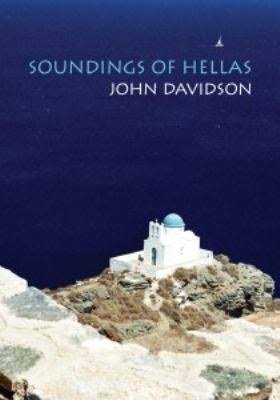
JD: It was only when I was working on the poems which became the collection 鈥楽oundings of Hellas鈥� that I allowed myself to turn significantly to the ancient world. This was because my theme called for it, as I was dealing with modern Greece and related Mediterranean areas (along with my experiences in the Wellington Greek Community with which I have been closely associated since the 1960s) in counterpoint with the ancient world. This was not in any way an artificial process, but totally natural. In the opening poem, which reflects the first night I spent in Greece in 1967, I refer to the night sky in the words of Sophocles in the 鈥楾rachiniae鈥� 鈥� aiola nyx 鈥� and this sets the pattern, with frequent references and images thereafter which link the modern country with the ancient country and its offshoots. Thus I can name individual Greeks whom I have met Elektra, Apollo, Odysseus and so on. I can refer to famous Greeks from history and famous historical events. I can recall ancient associations of places I visited in Greece and see Greek myths alive in modern situations and art works. There鈥檚 always this bouncing to and fro between the present of my own experience and the past which I know from my academic reading. And I can relate to favourite poems of too, such as 鈥榃aiting for the Barbarians鈥�, which in my reworking, 鈥榃aiting for the Tourists鈥�, touches on the current downturn in the Greek economy, and 鈥業thaki Revisited鈥�, which reflects on Kavafy鈥檚 thought that the journey itself, rather than the homecoming, is what matters more.
AB: Can you give us some more detailed examples of your use of classical characters, themes and motifs?
JD: The poems which engage most extensively with the antiquity are 鈥極dysseus Dives鈥�, which is a kind of reception not only of the Odyssey but also of the subsequent Odysseus tradition; 鈥楾alking Olympos鈥�, which sees the ancient Greek deities manifested in different guises in Wellington; and the unashamedly corny 鈥楾ragic Punishments鈥�. The first of these imagines Odysseus in "retirement", and heading towards death, with all his heroic past now a distant memory. It also counteracts the tradition fostered by such poets as Alfred Tennyson and who have constructed an Odysseus either fretting to be off again after finding the return to Ithaki an anti-climax or actually involved in further adventures. The second sees pretty much all the Olympian pantheon alive and well on the Wellington scene (with Poseidon the "Earth-Shaker" in particular quite frighteningly relevant!) The third speaks for itself, presenting a catalogue of such characters as a "carpeted" Agamemnon, "sheepish" Aias, "dogged" Hekabe and "head-hunted" Pentheus. Sorry, I sometimes can鈥檛 help myself!
I am continuing to include the odd reference in my most recent poems, but I remain conscious of the fact that, especially since I鈥檓 not Greek myself, I must be careful not to end up being labelled as an academic pretending to be a poet!
AB: Do you have any future poetical projects in the works? Can you share the details with us?
JD: The plan is to complete a collection, tentatively called 鈥楥lassical Cavalcade鈥�. The idea is for each poem鈥檚 title to be the name of an historical or mythical character from the ancient Greek and Roman world, and for the poem itself to explore a relevant modern situation. There have been many individual poems of this nature, including my own 鈥楨lpenor鈥�, but an entire collection based on this is unusual. I have already written drafts of a handful of poems of this type and look forward to writing more over the next year or so.