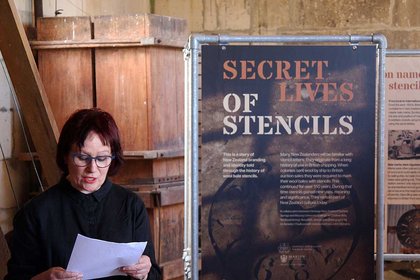
Dr Annette O'Sullivan at the launch of her exhibition The Secret Life of Stencils.
Curiosity about a vintage design stencil spurred senior lecturer Dr Annette O鈥橲ullivan onto seven years of research into New Zealand鈥檚 wool bale branding.
A typographer and graphic designer at 暴风资源鈥檚 Ng膩 Pae M膩hutonga Wellington School of Design, Dr O鈥橲ullivan has a collection of wooden and metal-type stencils, and it was the discovery of a vintage wool bale stencil that sparked her interest about the object.
In the first project of its kind, Dr O鈥橲ullivan completed a doctorate in the history of the iconic stencils which have become a well-known visual language for rural New Zealand, and are what she says the earliest form of 鈥渂randing鈥� in New Zealand.
Dr O鈥橲ullivan has curated an exhibition, Secret Lives of Stencils, in partnership with Heritage New Zealand, told through photographs of objects from iconic New Zealand sheep stations, and which is currently on display at the historic Totara Estate in North Otago until May 2021.
Wool was New Zealand鈥檚 primary export from 1850 to the start of the 20th century, and the stencils were developed as shipping marks denoting each sheep station.聽
Precursors to 鈥渂rand guidelines鈥� were developed in Britain to standardise the marks on wool bales through stencils, and personalised marks were often derived from registered sheep brands documented in brand books.
鈥淭hese branded wool bales were essentially New Zealand鈥檚 first export brands, which ended up being used for over 150 years, from the 1850s to the early 1990s,鈥� Dr O鈥橲ullivan says.
鈥淚n time, stencilled marks representing the quality of wool and reputation of the station became part of the visual identity for the station. Following discontinuation in the wool industry, at the beginning of the 1990s stencil plates and derivative stencil letters were used for new forms of visual identity in New Zealand design, 鈥� she says.
In the 19th century there was a stencil industry, with plumbers, tinsmiths, gunsmiths and locksmiths making them. However, many were made on the station by workers using found materials from plumbing, flattened corrugated iron, tobacco tins, and kerosene tins.
The stencils were painted on hemp bales with a range of substances such as soot and oil, tar, paint, nugget or branding ink. They were typically applied with a rag, brush or piece of wool and later by spray can.
Stencilling was used not only on wool bales but also on signage, gates, letterboxes and farm equipment as branding we鈥檇 recognise today, she says.
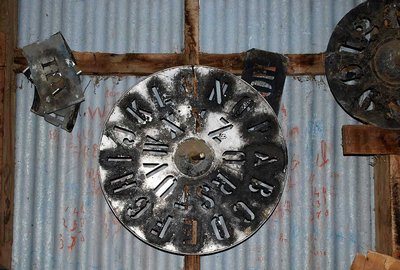
An original wool bale stencil at Snowdon Station.
The future of wool bale stencils
She visited 14 historic sheep stations around New Zealand and found that original stencil logos were still in use in contemporary branding. One example was at Clifton Station in the Hawke鈥檚 Bay. On the station stencil the letters JGG, from the name of the original owner James Gillespie Gordon, were combined with a brand mark of an anchor. This symbolised his passion for sailing 鈥� he had travelled by schooner from India to New Zealand, collected sheep from Australia and transported bales of wool to off-shore ships along the Hawke鈥檚 Bay coast. Today the symbol of the anchor is used in branding Clifton Glamping.
She says the historic items have not been given their due as an important element of New Zealand鈥檚 design history.
鈥淎 lot were thrown out and they鈥檙e disappearing, but they can still be found in early woolsheds. Perhaps people will start realising they鈥檙e an important part of our heritage.
鈥淭hey are collectors鈥� items now - you can buy them as early New Zealand memorabilia or use them for printing, and you can see them in cafes, pubs and rural museums. The stencil is a symbol of New Zealand identity, like Kiwiana, and I鈥檇 like to see them documented.鈥�
She says it鈥檚 the stories they tell that hold such appeal. 鈥淣ot only about the people and places they came from, but the brand marks are fascinating in themselves and tell stories about the owners. Even the names of the stations have meaning.鈥�
The exhibition is designed to be toured, made with materials you can see in woolsheds, galvanized scaffolding and printed on plywood.
After Totara Estate it will travel to Highwic in Auckland, the former home of Alfred Buckland (an early wool auctioneer), and Te Waimate Mission Station in the Bay of Islands, where Samuel Marsden sent some of the first sheep in New Zealand.