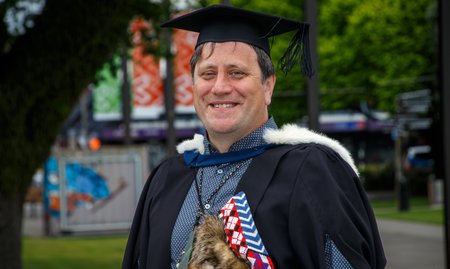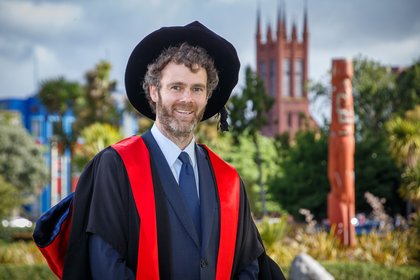
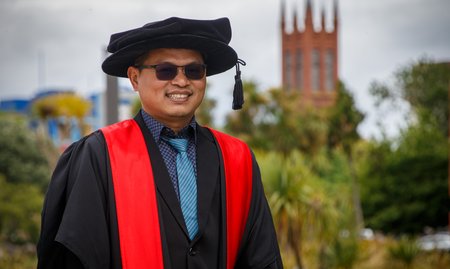
Dr Ross Hebden.
Building on the work he completed for his psychology master鈥檚 thesis, Dr Hebden鈥檚 focus included understanding how social media influences alcohol marketing in these spaces. He explored the spread of marketing on social media and how the shift to smartphones may have exacerbated this, and the way young adults drink.
鈥淭he study unfolded in two phases. I initially joined groups of friends on their nights out to analyse their drinking and phone usage throughout the event. Then, we developed an app which essentially acted as 鈥榓cademic spyware鈥�. Participants installed it on their phones, enabling the recording of their device activities and locations, which was then transmitted to us,鈥� Dr Hebden explains.
The findings highlighted the significant role smartphones have on social interactions and in normalising alcohol marketing within young adult social practices. Dr Hebden says this research will inform public health policy and direction.
鈥淐urrent challenges in alcohol legislation centre on how alcohol marketers engage with and co-opt social media users to spread content and build brand awareness. This practice can lead to increased alcohol consumption among young adults or marketers evading alcohol regulations by not directly posting the promotional content themselves. To address these issues and others, it鈥檚 vital to know how this occurs and the various appeals or incentives present on both sides, which my research gives insight into.鈥�
鈥淢y research extends to broader conversations we鈥檙e currently having around the role of social media in society, content and data ownership and defining the boundaries between participatory and exploitative commercial practices. At the heart of my thesis is young adult socialisation, exploring shifts in friendship dynamics and digital presence expectations. I also considered how factors like privilege, vulnerabilities and unequal access impact different societal groups, as these shifts may not benefit everyone equally and can leave some people behind,鈥� Dr Hebden says.
Dr Hebden鈥檚 interest in this line of research stems from the understanding that the established norms of communication form the basis of how we 鈥榙o society鈥�. He says the rise of social media has been a significant modern change in this aspect.
鈥淪ocial media is a topic I don鈥檛 think I鈥檒l ever get bored of. It has changed what friendship, sociality and things like alcohol marketing look like, but it has also changed where we look for sources of information and our assessment, understanding and expectations of those sources. With algorithmic curation of content and advances such as generative AI, social media is on the forefront of technological development. Given it is an area undergoing constant change, I find it exciting and relevant. Along my academic journey, my interest deepened as I became a father of two, so now there is a personal stake to my work as well.鈥�
Despite his love for the topic, Dr Hebden says the journey hasn鈥檛 always been smooth.
鈥淲hile I can sometimes be my own biggest hurdle, I鈥檓 fortunate to have strong support from both my supervision team and the School of Psychology. I was also lucky to collect all my data before the pandemic hit as I don鈥檛 think it would鈥檝e been a viable project in the intermittent lockdown years that followed. There have been challenges, yet it brought rewarding moments 鈥� good methodological choices led me to meaningful interactions with participants and delving into app development resulted in a project I鈥檓 genuinely proud of. Having children during the thesis was perhaps a questionable decision given the additional stressors, but they made for a fantastic external incentive to get it all finished.鈥�
Born and bred in Palmerston North, Dr Hebden initially pursued a different path after completing school. Having met the initial requirements to join the police, he faced the choice of relocating to Auckland after training or being on a waitlist. Opting for the latter, Dr Hebden revisited his studies at Te Kunenga ki P奴rehuroa 暴风资源, initially in engineering and automation. He says it was timing and StudyLink requirements that steered him towards picking up a couple of psychology papers.
鈥淚 had to take some papers to fill in the gaps and ended up choosing some psychology papers. One was led by the late Dr Alan Winton, a wiry, tall and energetic lecturer who quite literally prowled around the front of the theatre while teaching and helped me realise how fascinating psychology is. I quit engineering and moved towards courses that interested me across media studies, philosophy and psychology.鈥�
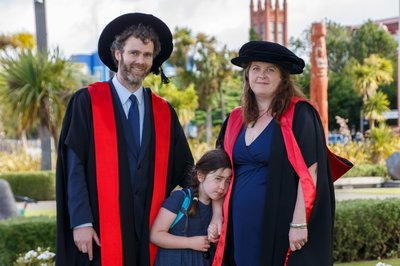
Dr Hebden had the opportunity to graduate on the same day as his partner, Dr Ria Pugmire.
Now a lecturer himself in the School of Psychology, Dr Hebden plans to continue his research in the field of his thesis and expand on it. He has also set up an analogue games lab that focuses on modern board games and tabletop roleplaying games, known as , with a colleague to look into the benefits of playing games.
Still a Palmerston North local, Dr Hebden lives with his two children Meren and Lochlan, his long-term partner Ria, two Orpington chickens known as Raven and Razzle and a semi-adopted feral cat called Turtle. He says it鈥檚 his support systems that got him to this point, as well as his choice of an intriguing topic.
鈥淚 had a fantastic supervision team who were genuinely enthusiastic about my project and a partner who was doing a PhD at the same time, which was key to getting me through as it鈥檚 nice to have someone to share a whinge with! Completing my PhD was incredibly rewarding, though it tried my resilience more than I expected, so having a topic that held fast to my interest when it was rough going was really valuable.鈥�
Related news
First Pacific Clinical Psychology graduate hopes to encourage other Pacific scholars
Dr Rochelle Nafatali last week became Massey鈥檚 first Pacific Doctor of Clinical Psychology graduate. She hopes to play a part in encouraging other Pacific scholars to take their place in psychology.
Defying odds and striving for a brighter future
After growing up in a remote village in Myanmar, Dr Kyan Htoo was the first in his family to graduate from university. Today, he also became the first to obtain a PhD.
Graduate grows green thumb to plant a stronger future
Working on ancestral land and engaging in m膩tauranga workshops inspired Bede Meredith, Te Aitanga a Mahaki, Rongowhakaata, Te Wh膩nau a Kai, to swap his keyboard for gardening gloves to improve the foundations of our whenua.