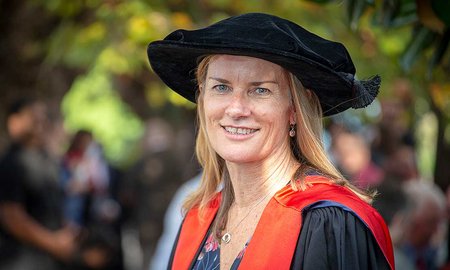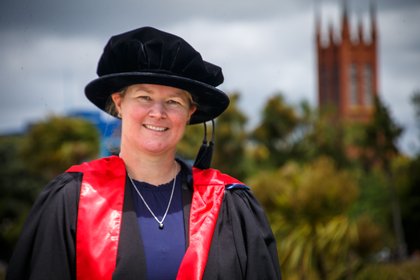
PhD graduate Michelle Greene researched how to make Physical Education (PE) programmes in school relevant, engaging and empowering for more students to have a positive experiences with physical activity.
Dr Greene鈥檚 research focused on the role culture can play in young people鈥檚 engagement and enjoyment of PE, in Rarotonga, Cook Islands.
鈥淚 travelled to Rarotonga on two separate trips and spent time in two secondary schools as well as participating in village sporting events and coaching,鈥� Dr Greene says.
鈥淢y research shows that for empowerment to be culturally relevant within the PE classroom in Rarotonga, focusing on inclusion and support within activities that do not always focus on physical capability is essential.鈥�
鈥淭he inclusion of vaka and other cultural games in the curriculum is fundamental to ensuring local values are maintained and perpetuated. Social connections with friends and classmates were also crucial in the enjoyment of physical activity.鈥�
Interestingly, Dr Greene discovered that some sports in the PE programme had the potential to threaten culturally-defined masculinities.
鈥淭here was a greater perceived threat to masculinity if boys participated in sports that were deemed feminine, such as netball. It was fine for boys to play these sports if they were just 鈥榤ucking about鈥�, but if boys were to play these sports seriously then this had the potential to have their masculinity called into question by other students. This hegemonic masculinity influenced boys鈥� behaviour in the classroom.鈥�
Her research also highlighted a need to move away from solely teaching sport skills as the main focus in PE.
Dr Greene is Upper Hutt-based, where she lives with her partner Nicholas and 聽17-month-old son Rowan, who was born three days after she had submitted her PhD thesis.
鈥淚 lived in Upper Hutt for the duration of my PhD, regularly travelling to Palmerston North for meetings and other PhD milestones, until COVID-19 changed these meetings to Zoom.鈥�
Michelle completed her undergraduate degree at Massey, completing the discontinued 鈥楧iv B鈥� programme, a four-year specialised secondary PE teaching course.
鈥淚n my final year I completed the paper 鈥楻ich World, Poor World鈥� which explores developing nations, poverty and inequality. I knew then that at some stage I wanted to complete my master鈥檚 in development studies. Ten years into my teaching career, I completed my Postgraduate Diploma studying part-time while working full-time, then I completed my Master of International Development.鈥�
Dr Greene currently works part-time at Massey as a Junior Research Officer, working for her PhD supervisor Associate Professor Rochelle Stewart-Withers.
鈥淲e tried for a long time to have a child and I鈥檓 grateful for the work opportunity as it allows me to work from home while having Rowan in my care. In the future, I hope to find work in Wellington in a PE/Sport Advisor role.鈥�
She says she has been fortunate to work alongside some amazing women and men in the Institute of Development Studies.
鈥淭he amount of support and encouragement they have given has got me through some challenging times. A big thank you to Associate Professor Rochelle Stewart-Withers, Professor Regina Scheyvens and Dr Jeremy Hapeta.鈥�
More news
Taking culture to the playground
Mainstream measurements of children's physical activity do not effectively capture the cultural influences of parenting and its impact on children's play and travel.
Cultural approaches to activity the key to tackling obesity for women
The health benefits of a physically active lifestyle are widely known, however, no such investigations have focused on New Zealand women from different ethnicities, nor on their physical activity in relation to health.