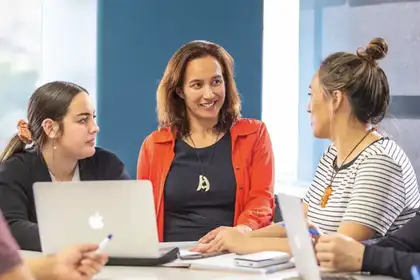
In 2023, the Ākonga Māori Success team started the Kaihāpai mentoring programme to help improve Māori student outcomes within the College of Health, Massey Business School, and the College of Humanities and Social Science. The programme is part of Pūrehuroatanga, a university-wide strategic initiative aimed at lifting student success and ensuring equity and parity for all students, with an added focus on ākonga Māori, Pacific learners, disabled and neuro-diverse students, digital innovation and student journey programmes.
Pou Ākonga Professor Dame Farah Palmer says the Kaihāpai programme helps students in a variety of ways.
“Mentors provide academic support by working with course coordinators to help identify topics that students struggle with. They can refer students to key services that are available to help them in their academic journey, and they maintain regular contact with students and provide them with a sense of belonging at Massey.
“The Kaihāpai programme has the ability to inspire Māori to do better. It provides mentors with an opportunity to share their experiences, knowledge and successes relating to their journey at ±©·ç×ÊԴ and in tertiary study. The mentors have studied for a number of years or are ahead in their education, so they can effectively share their knowledge and help other students.”
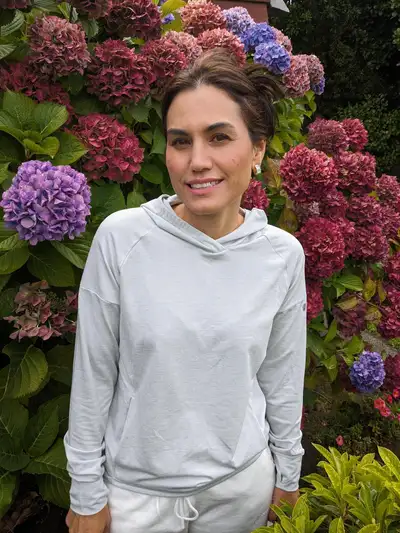
Kaitautoko Māori Serena Lewis
Serena Lewis is a Kaitautoko Māori in the College of Health and has been mentoring Māori nursing students for the past two years. She also mentors students in her other role as a Registered Nurse, which she has been doing for 20 years.
Ms Lewis says the type of support she provides varies from student to student.
“Every student struggles with something different. Some have academic struggles, whether it’s the course content or submitting assignments on time. Others have struggles outside of university that impact their studies, like working long hours, the cost of living, lack of support from their family or emotional trauma. These are some of the barriers that impact students' success.
“The type of support I provide depends on the needs of the students, however, for many of them, I will refer them to the Māori model of health Te Whare Tapa Whā. This framework incorporates the five cornerstones of health. This support structure enables students to identify imbalances they may be dealing with in their personal lives, which can affect their studies,” she explains.
The amount of help Ms Lewis provides is also dependent on the student and the time of the semester. Assignment weeks and exam periods are very busy times. Course coordinators work closely with Kaitautoko Māori and will let them know if a student is struggling, so they can connect and support them to pass by offering them one-on-one or group sessions, and kaihāpai (mentoring) support.
“There are certain courses which students often reach out for help with. Courses in bioscience can be quite challenging because there is a lot of new information and it’s more science-based than other courses they are taking in nursing. I break it down for students at their level, then build their knowledge from there. At some point, every student has that moment where everything just ‘clicks’ and all the course material makes sense.”
She adds that some of the assistance is about managing expectations and getting a positive outcome for each student.
“With each student I have interacted with there has been a positive outcome. This may include advising a student to reduce the number of courses they are taking if they can’t balance full-time study, or on occasion withdrawing from courses so they can re-take them at a later date when they are better prepared.
“One student I mentored failed their bioscience test. Their lecturer reached out and asked for support. I meet up with the student and identified why they had failed and we were able to recognise their learning needs. We then put together a plan that included weekly tutorials. In these, we focused on the courses that were difficult to understand. This is where I get to introduce material tailored for the student at a level they can understand and comprehend. The student went on to pass their bioscience test.”
One of the students Ms Lewis works with says studying was difficult as a Māori student who hadn’t studied at university for 10 years.
“There wasn't much Māori presence in the classes I was taking, so I didn’t feel like I could connect with anyone on a cultural basis and I didn’t sense the whakawhanaungatanga (connection) or tautoko (support) from Massey. When Te Rau Tauawhi and a Kaitautoko Student Advisor [Serena] contacted me, I sensed their concern, felt protected and secure and thought I could carry on with my studies at Massey.”
First year nursing student Bailey says having a Māori advisor who is a nurse made her feel more comfortable to talk about her struggles.
“It's nice to have someone I could talk with about my personal life and academic struggles. I don't have that connection with my tutor to open up and talk about personal things going on in my life that have impacted my studies. My mentor also showed me the many services that were available to students and how it can help in my academic journey.”
A Master of Clinical Practice (Nursing) student says the Kaihāpai have been a great channel to safely express any learning difficulties.
"I sometimes feel embarrassed to connect with my lecturers about course material I don’t understand. Having tutorials with Serena helps me to understand at a level I can comprehend, without feeling ashamed or embarrassed."
Ultimately, a ‘for Māori, by Māori’ approach to offering support, be it pastoral through Te Rau Tauawhi, or academic through Kaitautoko Māori and Kaihāpai is having an impact on the wellbeing of our Ākonga Māori but also on their ability to stick with their studies and complete assessments, and ultimately the course. We need to get better at promoting the great work that Kaitautoko Māori and Kaihāpai are doing in the Colleges, and in specific programmes and courses because, when students take up these opportunities to engage in a culturally appropriate and tuakana-teina way, their results improve and their sense of belonging as Māori is enhanced with Te Kunenga ki Pūrehuroa.