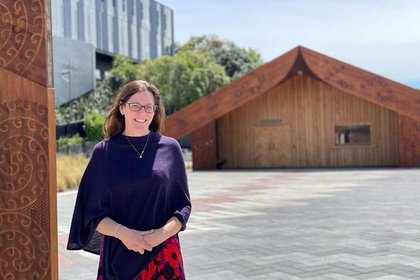
Dr Julia Becker is the lead researcher of this new project.
New ground-breaking research could drive fundamental changes to the way New Zealand agencies communicate and respond to volcanic risk.
Funded by the , the Massey-led research project will investigate how agencies have communicated risk during times of inactivity, unrest, eruption, and post-eruption in previous volcanic events in this country and globally, to create an effective approach for future events.
Lead researcher Associate Professor Julia Becker from the Joint Centre for Disaster Research says communication of volcanic risk varies over time, depending on the status of the volcano and the population at risk, and is challenging due to the unpredictability of an eruption.
鈥淲e want to learn from our previous responses and use our results to help improve New Zealand鈥檚 volcanic preparedness, resilience, emergency management and warnings. Communication about such aspects is essential to inform decision-making and keep New Zealanders safe.鈥�
While Dr Becker鈥檚 research primarily focuses on volcanic risk communication, the research scope will also include aftershock communication approaches that were useful to agencies and the public during the Canterbury earthquake sequence.
鈥淲e want to see whether communication for earthquakes could be transferable to a volcano context. It鈥檚 clear that an integrated approach would help to understand the range of ways to effectively communicate volcanic risk and provide advice for decision-making.鈥�
Dr Becker is one of 13 recipients of EQC鈥檚 2022 Biennial Grants. She will be leading a research team from Massey and , working alongside the , local iwi and聽 agencies responsible for volcanic risk management in New Zealand, including .
EQC Research Manager Dr Natalie Balfour says communications about any natural hazard are crucial to keep the public safe and informed.
鈥淭his research will ensure that important lessons from the past are not lost and will help us communicate volcanic risks more effectively in the future. New Zealand experiences a range of volcanic activity and eruption styles.
鈥淭he eruptions of Mt Ruapehu [1995/96], Te Maari Crater [2012], and events overseas such as in Tonga, all provide us opportunities to learn. Successful communication of volcanic risk will help the public and other decisionmakers to better plan and prepare.聽
鈥淲e鈥檙e funding this project as it fits perfectly with EQC鈥檚 vision to create better understanding of the natural hazards we face and how we can better prepare for them.鈥�