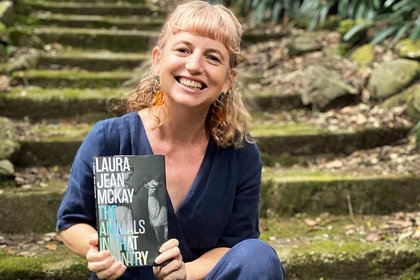
Dr Laura Jean McKay with her prize-winning novel about a pandemic (photo/Dr Kyra Clarke)
Dr Laura Jean McKay had just finished editing a novel about a viral pandemic and left behind raging bush fires in her homeland to take up a teaching job here, when life began imitating art. Cue COVID-19. Titled听The Animals in That Country, her book has just taken out Australia鈥檚 most valuable literary prize.
Now teaching creative writing at Massey鈥檚 Manawat奴 campus, Dr McKay is coming to grips with the 鈥渓ife-changing鈥� success of winning the AU$100,000 Victorian Prize for Literature, as well as the AU$25,000 Fiction Award, announced in early February.
Her novel, in which a rogue virus gives infected humans the ability to understand animals, was up against shortlisted celebrated writers such as Richard Flanagan. While she defines the book 鈥� her first published novel 鈥� as 鈥渟peculative fiction鈥�, aspects of the pandemic theme turned out to be scarily accurate.
As bush fires burned out of control in New South Wales and Victoria at the end of 2019, the first cases of coronavirus were emerging in China as she was doing final edits prior to publication with Scribe. She briefly returned to Australia to make an audio recording of the book. It was just before lockdown. 鈥淭here I was, reading out scenes of people locking down, wearing masks etc. Then I would go out to the supermarket in Sydney and people were wearing masks 鈥� there were these weird replications!鈥�
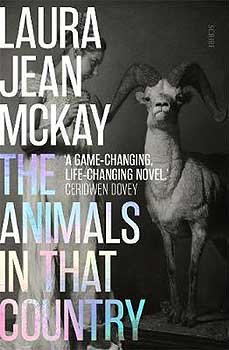
Book cover
Impressively prescient as this may seem, Dr McKay declines oracle status, saying 鈥渁ny pandemic follows a trajectory. I鈥檇 been an aid worker during the SARS virus, so I knew the pattern.鈥�
Set in Australia in the near future (without naming the country), the ambitiously imaginative work centres around Jean, a middle-aged ranger in the midst of divorce who likes her smokes and booze and prefers the company of non-human creatures. Animal characters include a dingo named Sue as well as a cast of birds, insects, mice, wallabies, a koala and a whale.
鈥淭he main idea was that we all have connections to other animals whether we like animals or not鈥et we sort of see ourselves as superior because we have language,鈥� she says. Her novel explores 鈥渨hat would happen if we took away that language barrier. What would happen if we could finally understand what they were saying?
鈥淚n the novel it turns out they鈥檙e not saying 鈥業 ruve you鈥� 鈥� they鈥檝e got their own things going on.鈥�
While she is not the first novelist who gives voice to animal characters (George Orwell鈥檚 1945 allegory听Animal Farm听is a classic), she was worried at the reaction when she鈥檇 tell people her PhD was in literary animal studies. 鈥淧eople would laugh 鈥� it sounded ridiculous to them.鈥�
However, she found courage and inspiration from a legacy of writers 鈥� including George Orwell, Eva Hornung (Dog Boy) and Witi Ihimaera (Whale Rider) 鈥� and publishers who 鈥渂elieved in the book and fought for it.鈥�
Her research included living in a wildlife park in Northern Territory for months, speaking to rangers and spending time watching wild and captive animals. Celebrating the diversity of animal biology and bodies, and imaging how they experience reality, is another dimension of the book. 鈥淭ake the extraordinary experience of perceiving the world sonically as a bat does. What does that do to your world view when you don鈥檛 prioritise vision and language as we do? How does that change everything?鈥�
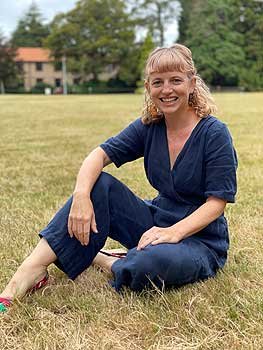
Laura at the Manawat奴 campus
Kafka-esque crisis听
A frightening encounter with the animal world has shaped her life and writing, heightening an awareness of the fragile boundaries between humans and non-humans. She attended a writers鈥� festival in Bali in 2013, was bitten by a mosquito and contracted the rare disease chikungunya 听鈥撎�"health workers describe it as being like dengue on crack," she told Australia鈥檚 ABC News.
Symptoms included extreme fever, peeling skin and arthritis that made her so weak she could just crawl up the stairs to her writing desk, adding, 鈥渋t鈥檚 disgusting, but leaving a trail of skin.鈥澨�
Enduring Kafka-esque moments, she become so delirious with fever that; 鈥渁t one point I thought I must be turning into a mosquito 鈥� I thought that鈥檚 the only explanation for what鈥檚 happening to me.鈥�
Echoing Franz Kafka鈥檚 1915 novella听The Metamorphosis听(in which the main character awakes one morning to find himself transformed into a giant insect), she wrote a story about the experience. Her latest work is also 鈥渋nfected鈥� by the illness, which took two years to recover from. Amazingly, she had just begun her PhD and was able to work on this intermittently as her health slowly improved.听
Always an avid reader, Dr McKay says her writing reflects her background in humanitarian work and her interest in researching post-colonialism and de-colonialism. A deep awareness of power structures is at the essence of her writing. Her first book,听Holiday in Cambodia听(a short story collection) was published in 2016.
Was she destined to be a writer? Her mum and aunties were librarians. 鈥淭here were books everywhere 鈥� everybody read all the time.鈥�
She and her mother and brother lived with her aunt Nola who had a rural library bus in Gippsland, Victoria. Her father Ross, who died just before she was born, was a poet and she feels that growing up with his work 鈥� published posthumously by her mother 鈥� is also part of her legacy.听
Melbourne to Manawat奴
Coming to New Zealand with her Kiwi partner Tom Doig, also an author, Dr McKay says she is excited by the energy and support of the creative writing department at Massey. It is, she says, 鈥渇illed with active writers who are passionate about the craft, who are producing amazing works all the time and who are dedicated to the programme 鈥� it鈥檚 really exciting.鈥�
She is currently teaching first year courses in Creative Writing and Creative Communication as part of the Bachelor of Arts and Bachelor of Communication programmes and is excited about the launch of a new Eco-Fiction and Non-Fiction paper she is coordinating with Associate Professor Ingrid Horrocks in Semester Two.听
Having lived in her imagined pandemic for some time, she says the real pandemic is much more serious and devastating and is saddened to see the continued progression of COVID-19 globally and the suffering of so many. She left Australia in a trail of smoke and flames and an emerging global virus. 鈥淣ow I鈥檓 pretty much in the safest place in the world in terms of Covid response, and everyday I鈥檓 grateful for that. The way the government responded, the way the people have responded 鈥� it鈥檚 so inspiring.鈥�
For more information on studying Creative Writing in Massey鈥檚 College of Humanities and Social Sciences, click听here.