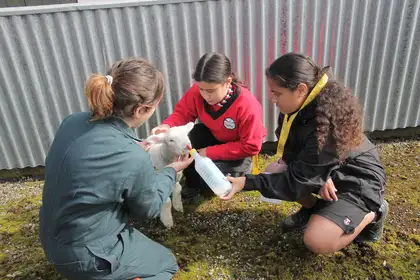
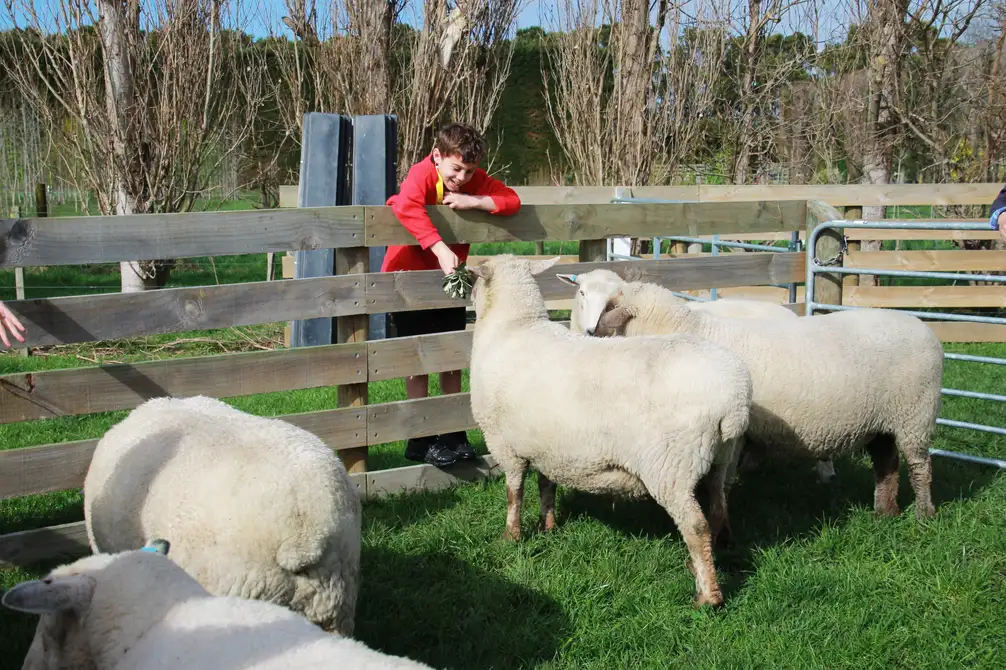
During the farm visit, tamariki were able to have a turn at bottle-feeding lambs.
Encouraging a love for lifelong learning in tamariki and rangatahi was the impetus behind two recent site visit events for Manawat奴 schools that take part in the W膩nanga Nohinohi te Kunenga Children鈥檚 University programme.
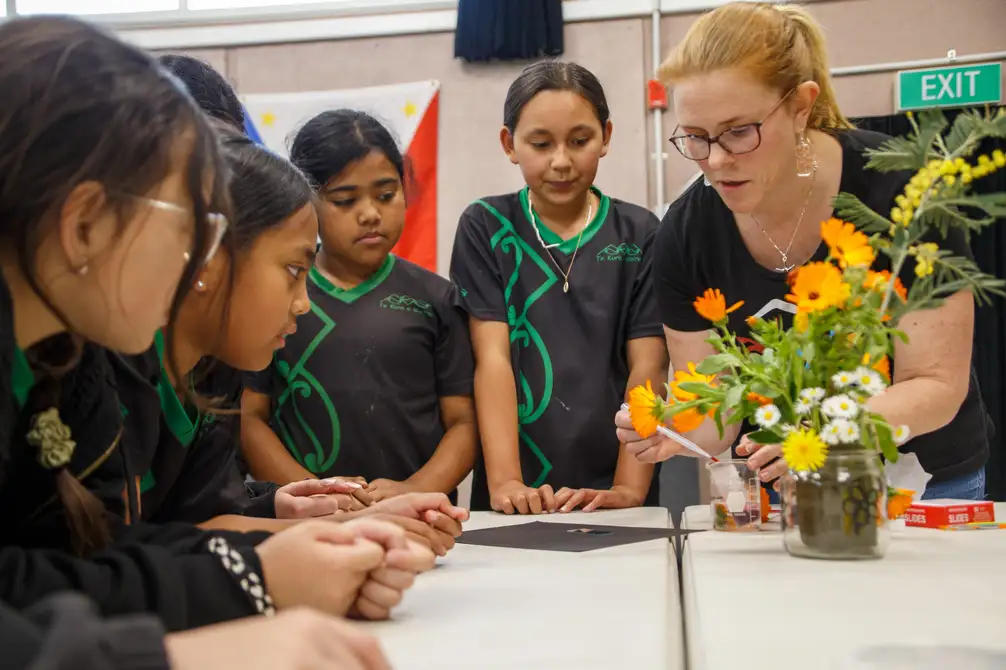
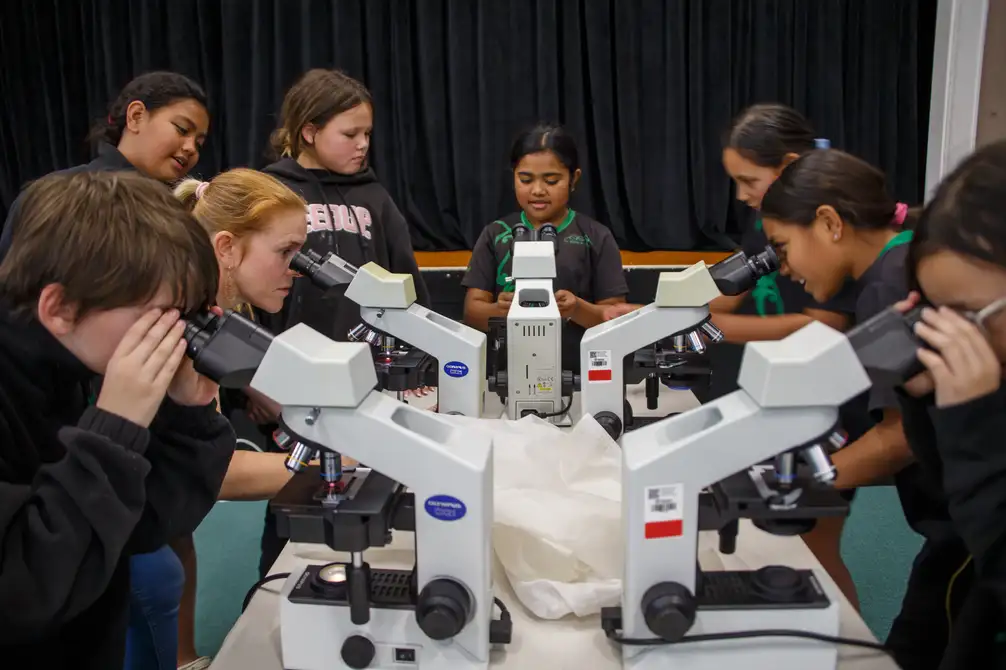
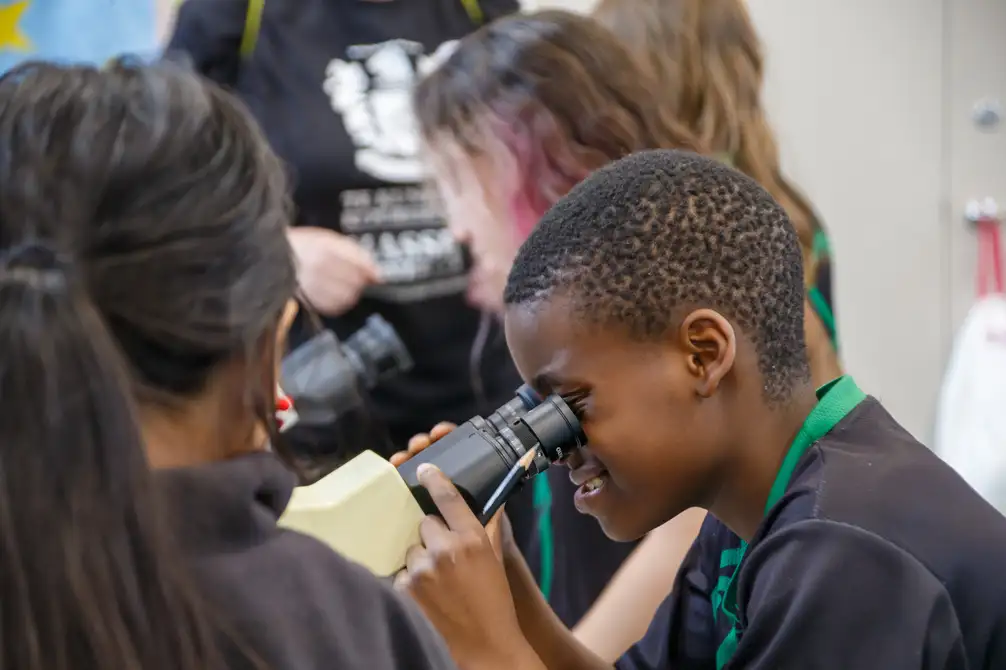
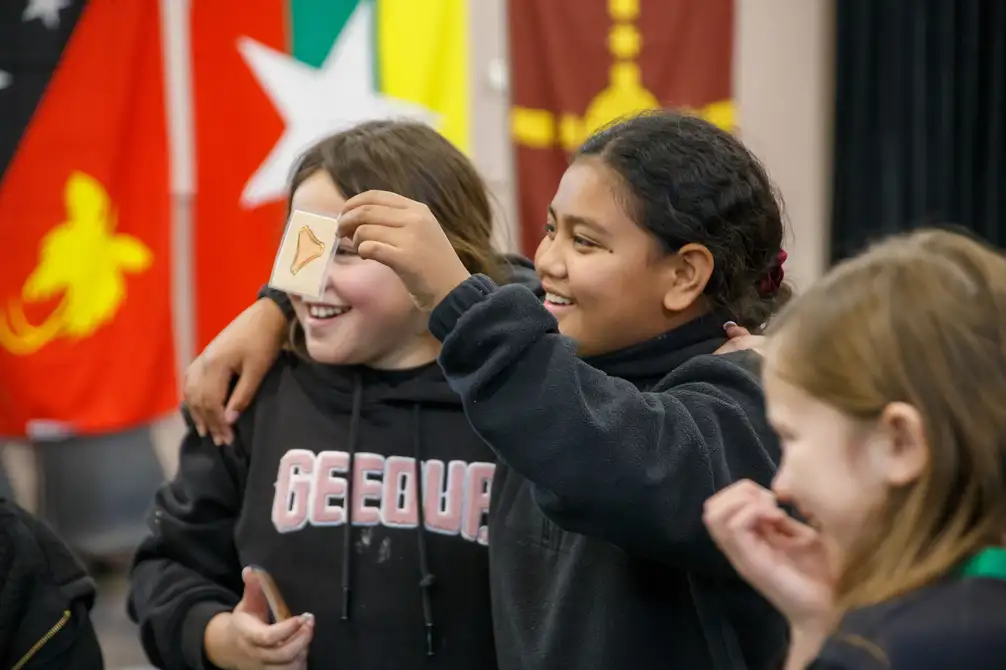
The first event took place on the premises of Te Kura o Wairau. Dr Katherine Holt from the School of Agriculture and Environment, who is an expert in pollen analysis, took the group of 15 膩konga (students) through two pollen-related activities. The first involved the group tasting two different samples of honey and describing their experience, before examining the samples under microscopes to identify which pollen was in each sample.
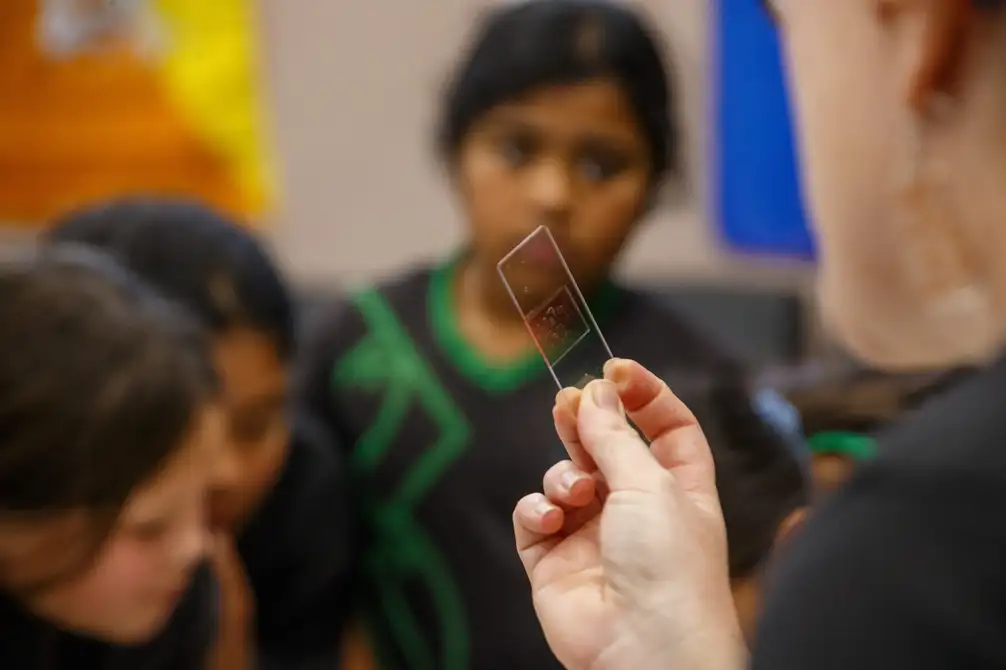
The second activity required 膩konga to act as 鈥榩ollen detectives鈥�. They had to make pollen microscope slides from different flowers and then identify the type of pollen that each flower produced.
The aim of the visit was to get the participants interested in science and its real-world applications, as well as provide some hands-on learning experience that was a bit different to what they would typically be exposed to in the classroom. If the 20 minutes of questions Dr Holt fielded at the end of the session are anything to go by, there could be some budding apiarists and palynologists in the making!
The second event took place at Dairy Farm 1 on Te Kunenga ki P奴rehuroa 暴风资源鈥檚 Manawat奴 campus. Thirty-three tamariki from Te Kura o Takaro spent the day engaged in a range of farm and nature-inspired activities, led by Associate Professor Penny Back and colleagues.聽
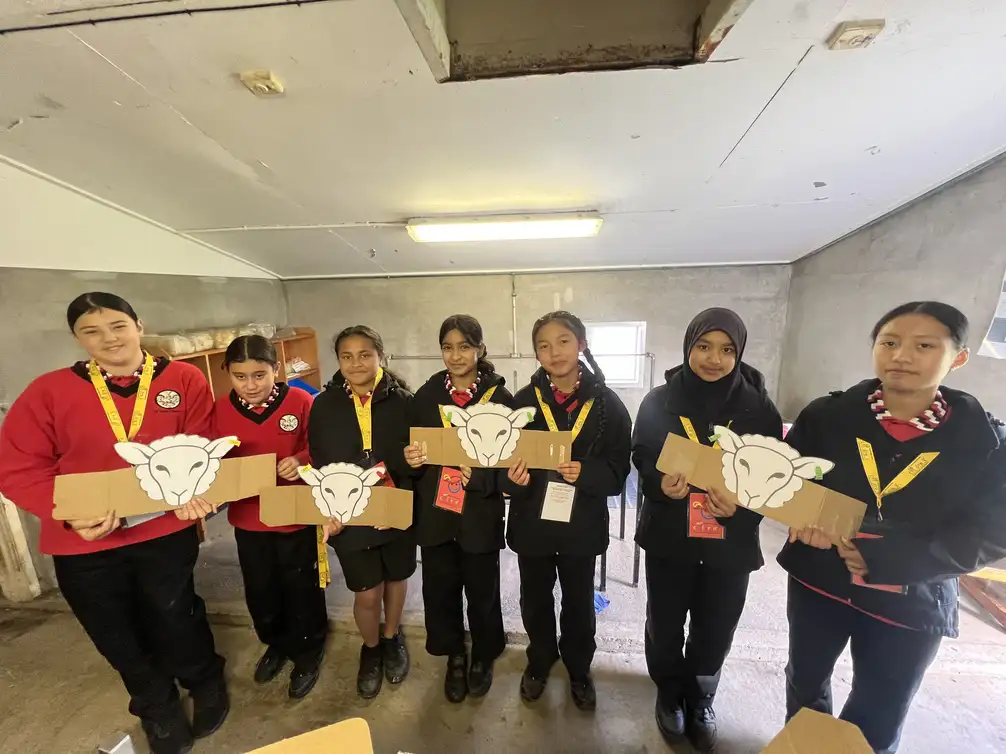
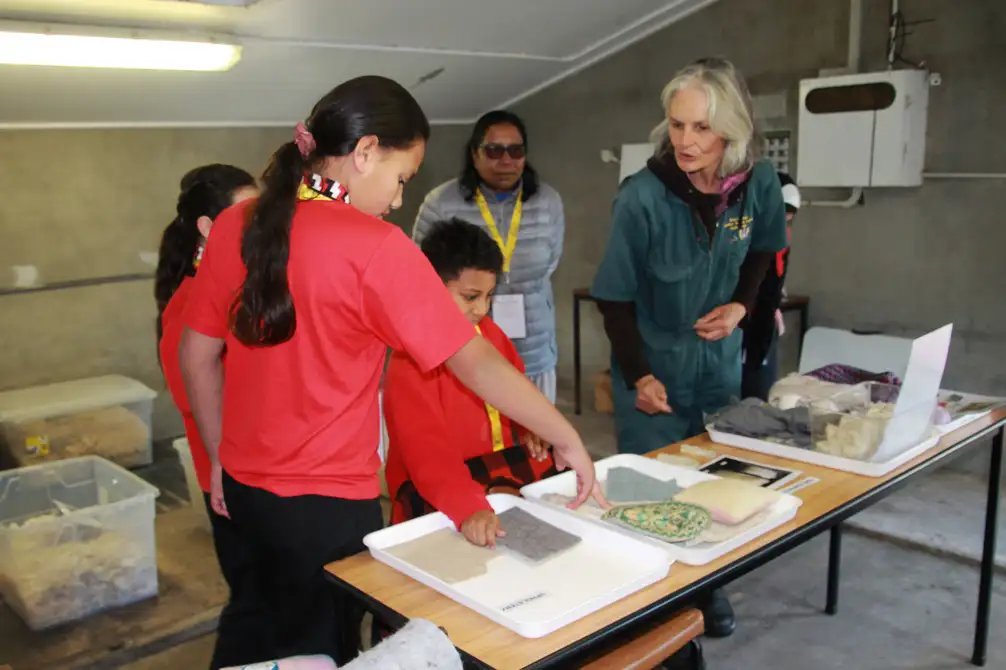
The first saw them weighing and feeding sheep, the second saw them go for a farm walk and give snacks to kunekune pigs and another group of sheep, and at the third stop 膩konga had a go at putting ear tags on cardboard sheep and were able to feel a series of wool samples from different sheep breeds. The visit culminated in bottle-feeding lambs, a definite highlight for many of the group.
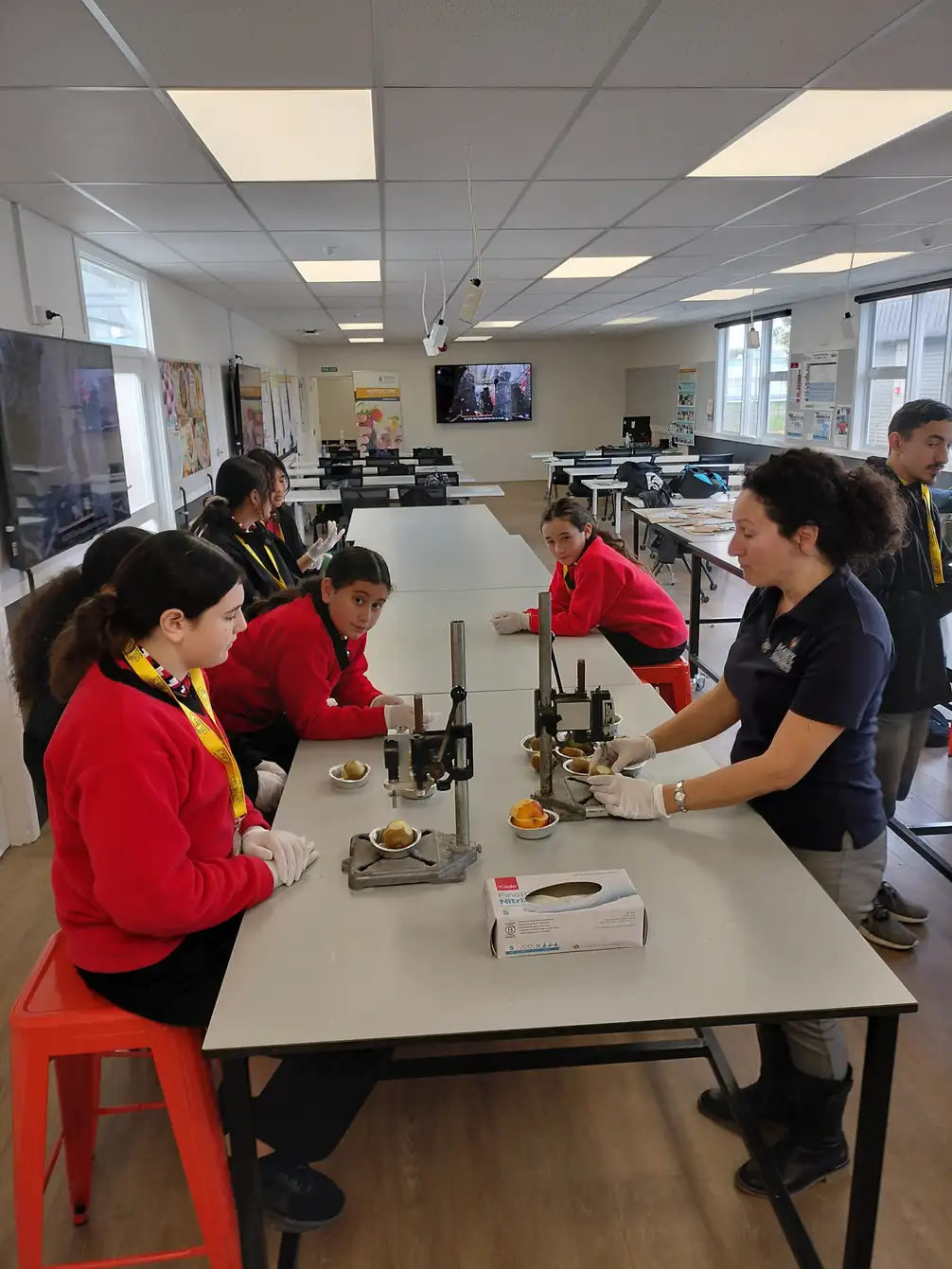
After a morning tea break, it was over to the Plant Growth Unit, where horticulture lecturers Dr Donita Cartmill and Dr Svetla Sofkova-Bobcheva worked with the group to test and compare the sugar content and ripeness of green and gold kiwifruit. They also had a walk through the Massey greenhouses and took home Massey-grown bean and tomato plants for the school garden.
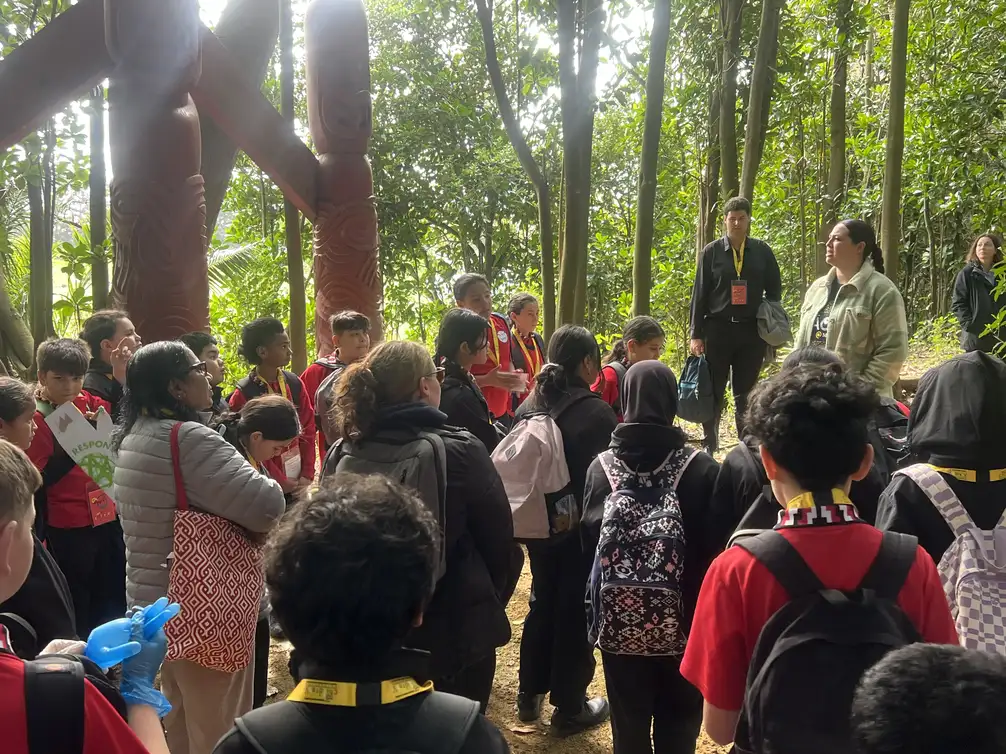
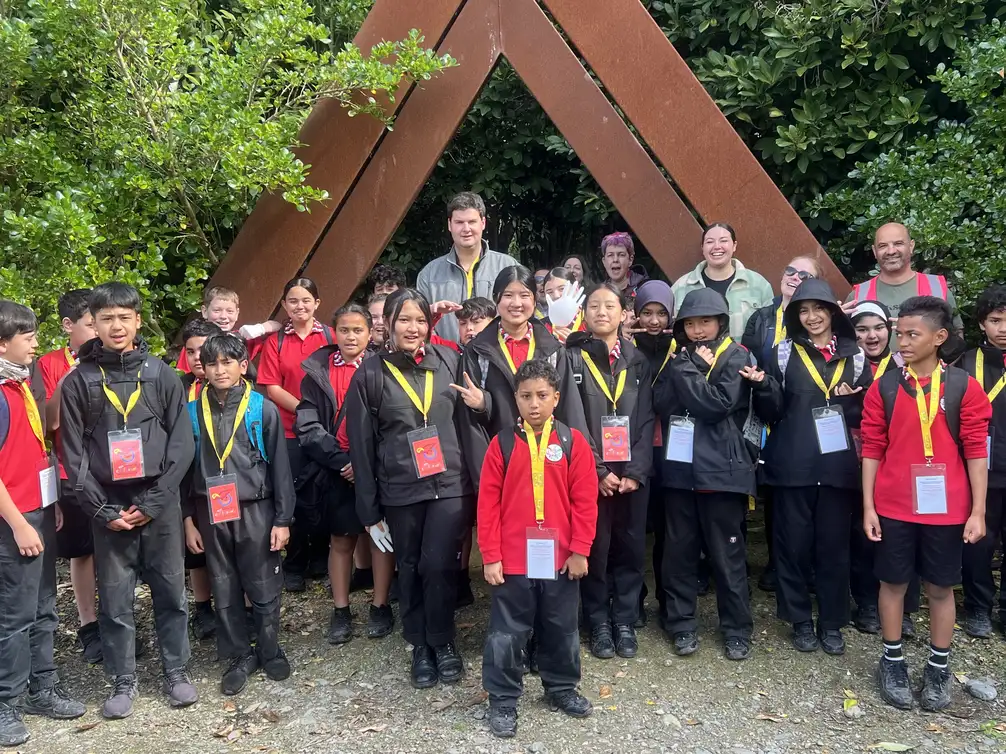
The final activity for the day was a short walking tour through Te Uru Karaka led by Kaiarataki Awarangi Nicholls, who shared some stories on the history and importance of this special place 鈥� the sacred grove of Karaka trees treasured by local iwi, Rangit膩ne, and cared for by 暴风资源.聽
Mike Smith, Kaitautoko M膩ori within the School of Agriculture and Environment, worked with Children鈥檚 University Programme Coordinator Bettina Anderson to plan the day鈥檚 activities.聽
"At the School of Agriculture and Environment, curiosity sparks discovery and every question leads to new adventures. Together, we explored the wonders of learning and interacting in the environment. We explored nature's treasures and discovered聽the magic of where our food comes from.聽The infectious enthusiasm of the students rubbed off on the staff. This was an amazing experience for us, as well as the students and staff from Te Kura o Takaro,鈥� he says.
He adds that for many 膩konga it was their first experience of a farm setting, and all the smells and sights associated with it, and most were eager to get hands-on, particularly with the farm animals.
About Children鈥檚 University
Children鈥檚 University is an international charity initiative that supports and encourages young learners to participate in educational experiences outside the classroom. The programme identifies learning destinations where tamariki and rangatahi (our 膩konga or students) can explore, gain confidence, and develop a passion for learning. Massey is the North Island franchisee offering the Children's University programme, which started in the United Kingdom in the 1990s. A partnership between Canterbury University and Lincoln offers it in the South Island.
To join the programme, 膩konga apply through their participating school and once they鈥檙e enrolled, they receive their Passport to Learning. With their passports, they can visit local learning destinations of their choice. Visits are recorded, and each entry is validated in their passports by the learning destinations.
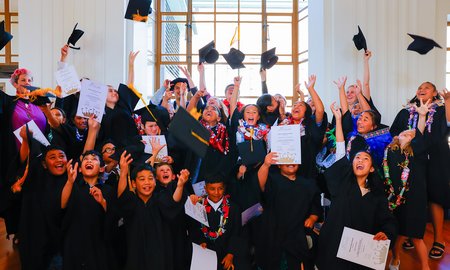
They also get membership to an online learning portal with information about local destinations, along with a wealth of online activities that can be done at home. Once 30 hours or more are earned in their passports, 膩konga receive a certificate at a graduation ceremony to celebrate their achievements. Massey Children鈥檚 University W膩nanga Nohinohi te Kunenga held its first鈥�graduation ceremony鈥痠n December 2021.
More information about Children鈥檚 University is available鈥�here鈥痺ith regular updates provided via the programme's .
Related news
Building minds and fuelling potential at inaugural Children鈥檚 University Discovery Day on 艑teh膩 campus
Curiosity and future aspirations were ignited as two school groups from T膩maki Makaurau Auckland attended the first Children鈥檚 University Discovery Day on 艑teh膩 campus, gaining firsthand experience of university life.
A taste of university life for Children鈥檚 University 膩konga
Almost 300 膩konga have been acquainted with university life through Discovery Days on the Pukeahu Wellington and Manawat奴 campuses over the past fortnight.
Graduation ceremonies top off a successful year of Children鈥檚 University
It鈥檚 been another successful year for W膩nanga Nohinohi Te Kunenga Children鈥檚 University programme at Massey, culminating in graduation ceremonies in Wellington and Palmerston North.