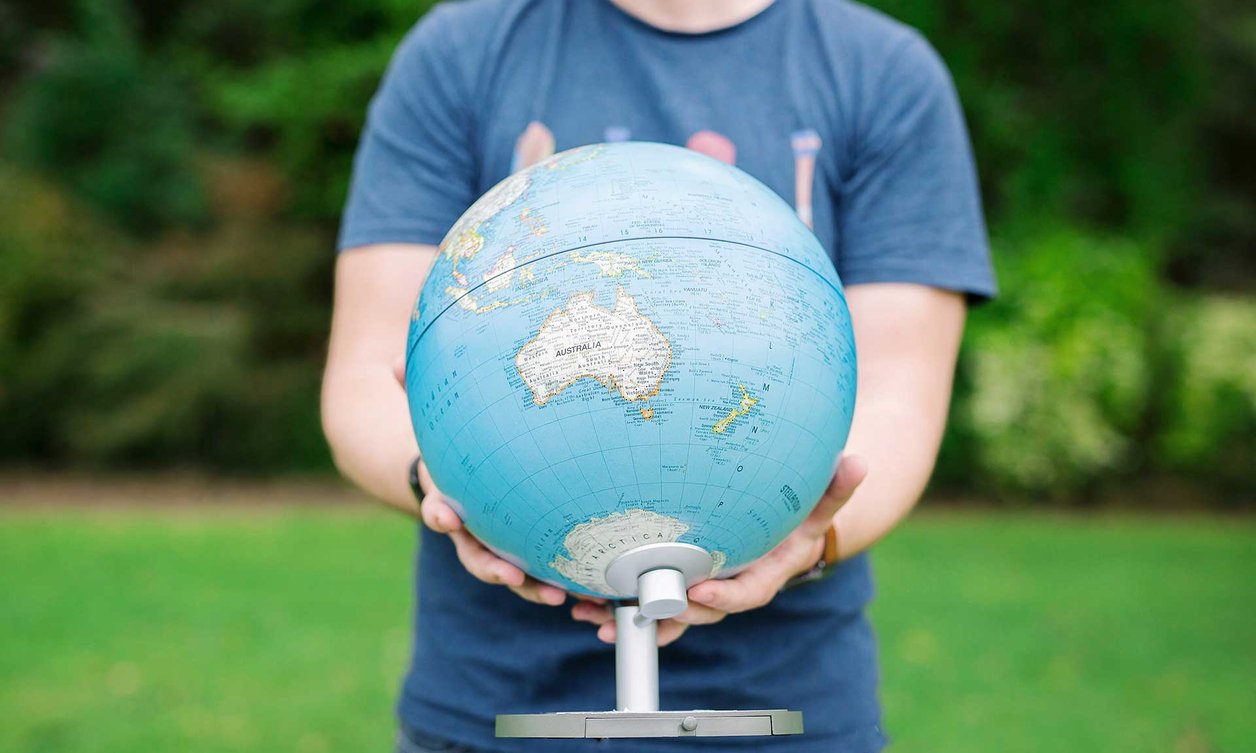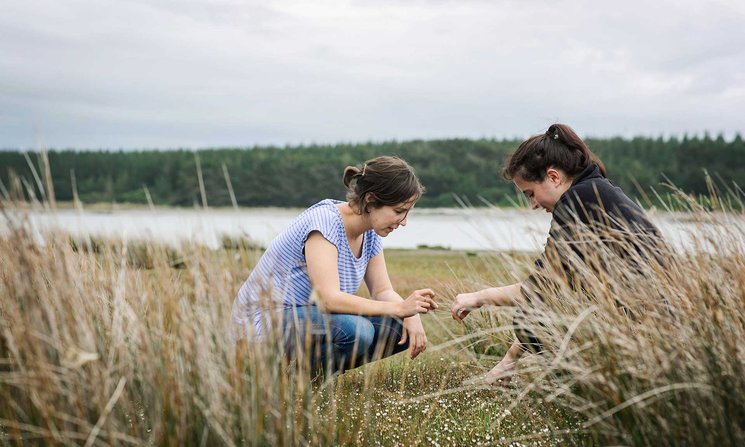
Muaūpoko and Rāngitane o Manawatū partnered with Senior Research Officer Craig McGill and Junior Research Officer Gina Aubia with support from Professor Jonathan Procter on seed collection and banking of indigenous taonga species. The MBIE Vision Mātauranga Capability Fund (VMCF) project has further enabled securing and strengthening the mātauranga Māori of ngāi tipu taketake (indigenous flora) for future Māori and Aotearoa.
McGill and Aubia’s partnership with Robert Warrington (Muaūpoko Tribal Authority) and Paul Horton (Rāngitane o Manawatū) brought immediate impacts on all partners that shaped the seed banking project as it occurred. The ongoing collecting and securing of seed, nursery managing, and extensive planting will continue to have environmental and economic impacts for Aotearoa.
Te ao Māori and indigenous sciences
Procter supported McGill and Aubia as they became acquainted with te ao Māori and indigenous sciences. During their collaboration with the iwi partners, McGill and Aubia learned more about the connection between the seeds and flora as taonga with significant whakapapa, specifically how the whakapapa connects the seeds to the wider habitat and the past.
Aubia reflects, “the VMCF allowed us a lot of freedom. We were able to explore a range of topics, which in a differently funded project we would be expected to fix.” For example, once they understood their iwi partners’ visions for seed banking, Aubia explains, “we wanted to redesign the seed bank project to include their vision, and we didn’t know where the project would go.”
"It is a co-guided project ...the science and mātauranga Māori are able to have a conversation because of that freedom," Aubia says.
In understanding the flora taonga and its seed this way, the seed banking approach shifted to consider new and different classification categories and methods. Another aspect of the collaboration was how local iwi could use banking seeds for different purposes for example, to use the knowledge accumulated as part of the banking to help other storage and restoration efforts. One of the Western science approaches is a long-term seed saving agenda, an effort to have seed stores available in the distant future as biodiversity is lost due to climate change and other short-sighted human practices. However, Māori partners also wanted to build seed securing capability for propagation and planting at varying timeframes for different purposes.
The Māori vision, they say, “helped them put seed banking into a wider context.” The co-guided approach supported Western scientists to “take a whole systems approach” and understand the value in putting the seeds back into the environment where they have real impact on the erosion prevention, water systems, fish, and how these environmental elements are interconnected.
"The seed bank isn't just a repository," McGill explains, "but it's also a knowledge database."
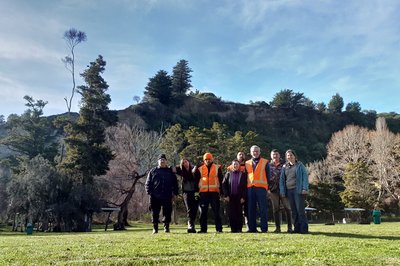
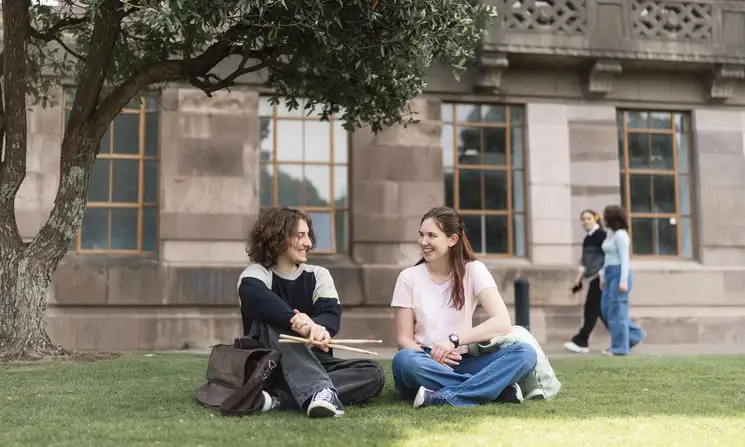
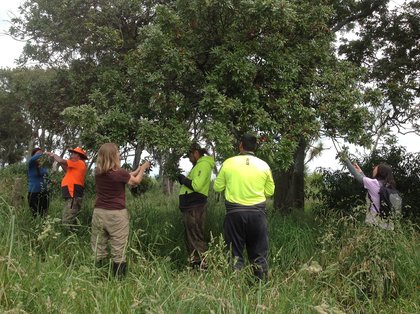
Members of Rāngitane o Manawatū, Muaūpoko Tribal Authority and ±©·ç×ÊԴ.
The Maara Team
Ongoing impacts from Muaūpoko Tribal Authority
Robert Warrington, the Maara Team manager for Muaūpoko Tribal Authority, specialises in eco-sourced, mostly ngāi tipu taketake for marginal conditions. His current mahi is a direct offshoot from the VMCF seed banking placement.
Formerly in taxation and accounting, Warrington was inspired by his Uncle Marokopa, a Horowhenua Lake Trustee, who also ran a nursery. Warrington successfully led the Glass Eels project in Foxton in partnership with Lake Horowhenua Trust, which he says, “was a lot of fun.” He had long figured out how to gauge the eels’ behaviour by the moon, tide and wind, whose conditions affect fish movement for both Glass Eels and whitebait. Another little trick was to place rocks in the water to aid self-cleaning, because the eels will brush up against rocks to clean themselves naturally. He says another innovation “was that we potty trained the eels by manipulating the water temperature.”
Prior to the seed banking project, the iwi seed collection practices were less methodical. Working with the Massey researchers, though, taught them how to collect seed for diversity and preservation. Now they pick roughly up to 20 per cent of seed from one population, for example, then move on to another population.
And although fresh seed is best for germination and propagation, Warrington explains that the weather patterns don’t always cooperate for consistent use of fresh seed: “hot and wet conditions are not the best conditions for seed, so seed stores are needed to allow for continual growing.” Therefore, he says, “learning proper collection, preserving and storing methods has been crucial for us.” They have continued with seed collection not only for long-term banking, but also to build their nursery.
Warrington explains, "we plant for different reasons. Everything we do here we learn from."
Roughly 15 large containers hold indigenous seeds in the nursery shed’s refrigerator. They are slowly building up the mātauranga around wetland plants that don’t exist currently in horticulture classification and knowledge texts. The Maara Team are also passing this mātauranga on to future generations. Warrington co-hosted a Horowhenua Lake event for children to plant, and “the children named the flora they planted after things they were doing that day. Now when they visit the lake they remember the plants they planted. They have a connection to them.”
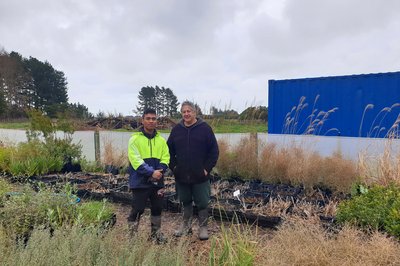
Robert Warrinton (right) and Biribo Teawaki in the Maara Team nursery.
Muaūpoko Tribal Authority funds the Maara Team with 14 full-time equivalent positions, which allows for whānau to build skills and knowledge while also doing environmentally impactful mahi. Biribo Teawaki, who has been on the team a little over a year, helped plant the nīkau and hoi hoi at the Levin’s Queen Street roundabout as his first contribution to the Maara Team's planting efforts. Teawaki is from Kiribati, the Pacific Island at greatest risk of losing its land territory to climate change first. He says the palm trees on Kiribati have coconuts, but the Aotearoa New Zealand nīkau do not have coconuts. (Niu is a common Pacific languages name for nutting palm trees, and kau means alone or naked in te reo Māori.) Warrington and Teawaki had a cheeky laugh in remembering that the Levin roundabout nīkau was named after Biribo, Te Wairua-O-Biribo.
Warrington’s team are doing a lot of the planting for major coastal restoration, which, he says, “is very important to us.” They have successfully planted 3710 plants, including kanuka, pīngao and other native plants. Their latest planting and growing contract expected 4500 plants in the first season, but they’ve managed to net 35,000 plants.
Muaūpoko seed banking and planting efforts have plenty of future ground to cover. Their “next journey,” Warrington says, “will be planting up the Ōtaki to north Levin (O2NL) motorway.” The O2NL project agreement requires motorway planting of locally sourced ngāi tipu taketake.
Warrington goes on to explain that “the bush is at risk. We’re in conversation with planners and relevant stakeholders. Our mahi has been elevated enough to be listened to now.” Warrington’s seed collecting and other environmental efforts have brought another important preservation issue to his attention, the endangered and rare pūpurangi (snails) in the Horowhenua. He and his team have found another Horowhenua reserve that shows evidence of a pūpurangi colony, currently of unknown specification, at risk of decimation by pests and human encroachment. Fortunately, a current VMCF project led by Dr Simon Hills is studying pūpurangi in Horowhenua, so Warrington has an ally in this preservation endeavour.
Research funders
Ministry of Business, Innovation & Employment (MBIE)
Te Pūnaha Hihiko: Vision Mātauranga Capability Fund
UN Sustainable Development Goals
Related content