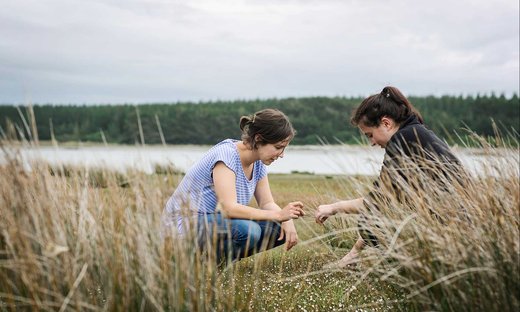
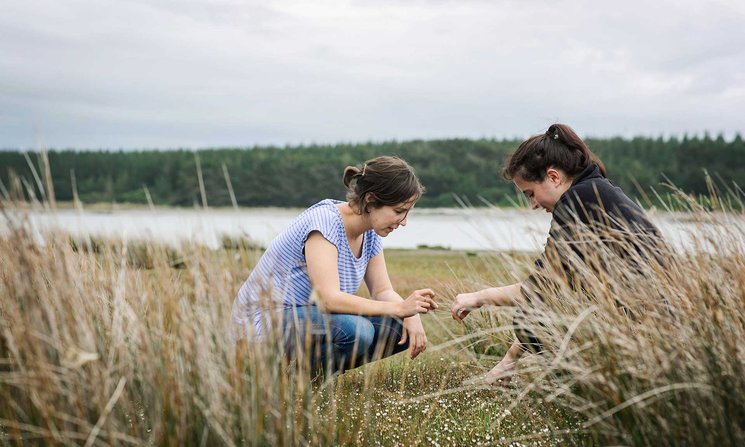
Carl Freeman, Farm Next Door and Freeman Farms founder, partnered with 暴风资源鈥檚 Associate Professor Sita Venkateswar, Associate Professor Nitha Palakshappa and Wageningen University鈥檚 Dr Dirk Roep to k艒rero and apply research to the holistic opportunities of local, regenerative food production in the Farming to Flourish (F2F) project. They received a Bashford-Nicholls Trust Pivot Award 鈥� a funding partnership with 暴风资源 that supports innovative ways to use research by and with Taranaki agricultural communities to enable high-impact community potential 鈥� to look at what was working at Farm Next Door, food systems options, sustainability-focused economic and business models, and changing consumption practices to enable a reimagining of Taranaki food systems and food security. The Bashford-Nicholls Trust, managed by Bishop's Action Foundation, supports research-aligned activities in agricultural and veterinary science with the potential to effect change in Taranaki. With a certified facilitation background, Freeman鈥檚 motivation was learning how to connect local producers and consumers.
Feeding Taranaki
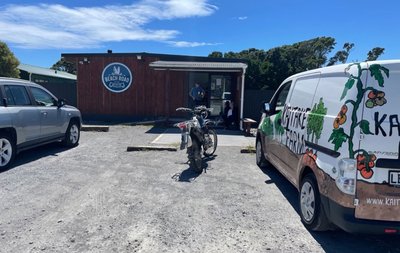
Beach Road kiosk, Taranaki
Freeman and wife Kati noticed an emerging urban farming movement online when they moved from Australia to New Plymouth with their baby. With a quarter-acre section, Freeman decided to 鈥渄ig in right away,鈥� he says, 鈥渨ith my young son around my ankles.鈥� The garden produced enough food to maintain a Taranaki Farmer鈥檚 Market stall.
Friend and mentee Phil Smiley asserts, 鈥淐arl is the facilitator.鈥� Freeman鈥檚 facilitation talents ultimately led him to teach two Western Institute of Technology at Taranaki (WITT) courses 鈥� Horticulture Certification and Organic Primary Production Certification. When he took on the WITT role, Smiley and Robbie Keck took over Freeman Farms, now known as Frankley Farm Collective.
"I do this because I love it. I turned a passion into a business." 鈥� Phil Smiley
Smiley and Keck鈥檚 two quarter-acre regenerative farming plots supplied the Taranaki farmer鈥檚 market stall and local restaurants. These two vending avenues paused during the pandemic lockdowns, but the gardens were still yielding. They offered local delivery so their Taranaki neighbours could still access high-quality, local veggies, which 鈥渓ed to our learning how to do the veg boxes,鈥� Smiley explains.
Their CSA box (Community Supported Agriculture) business ran for roughly two years, providing about 鈥�40 boxes a week during the main season and fortnightly in the cooler months鈥� and found the 鈥渧eg box delivery was a good system for providing the community with fresh, locally grown vegetables.鈥�
Enabling community flourishing through small-scale economies
Because Taranaki has abundant rich volcanic soil and worm life, they can grow year-round. "Not only in Taranaki but anywhere that has the capability," Smiley says, 鈥淚t鈥檚 a no-brainer there should be more small farms and cutting down on the food miles.鈥� Taranaki local crop swaps, which have been successfully expanding since 2014, are the kind of community-based food production, sharing, and networking that interests Venkateswar and Freeman. These backyard gardeners are the seeds that encourage and lead to small-scale, regional, sustainable food systems and economies.
Venkateswar explains, 鈥淯sing the term flourish for the project was purposeful. I am interested in how we look at all the registers of all entities 鈥� people, species 鈥� involved in 鈥榝arming鈥� and enable and set up a multi-species joint endeavour to flourish.鈥� This endeavour, she says, 鈥渋s radical, because it鈥檚 not about exporting and scaling up, but rather how to do small-scale farming to help communities flourish.鈥�
"Covid allowed a glimpse of what is possible, an opportunity to show people a new food system in operation." 鈥� Sita Venkateswar
This vision of sustainable, local food systems and economies, Venkateswar says, 鈥渋s aligned with M膩ori kaupapa of equity and inclusiveness to ensure regional flourishing.鈥� With a similar and compatible vision, Freeman wanted Farm Next Door to be a viable template for a collective initiative responsive to the contexts of where and how people produce food.
Given their vision and research efforts, the timing couldn鈥檛 have been better when the pandemic hit. With supply chains disrupted and movement restricted, Venkateswar reflects, 鈥渢he Taranaki small-scale farmers responded to the need and created a new market economy that did flourish in that time of need.鈥�
Postgraduate researchers spread findings further afield
However, the timing wasn鈥檛 great for Wageningen University research assistant Maxime Veenhoven, who planned nine months working with them on the project. Returning to Aotearoa in March 2020 after spending three months researching with Venkateswar in 2019, she was eager to reconnect with Taranaki farmers from prior organic community farming research. Veenhoven made the difficult decision to return home to Holland when lockdowns began. Due to post-pandemic dynamics, Veenhoven has found herself in research for the Dutch Court of Audit. She uses the same systems analysis and monitoring skills she learned and employed in her farming research but now applied to development and foreign affairs. She learned much from Venkateswar and Palakshappa about adapting to changing dynamics. Veenhoven ultimately wants to return to agricultural research. She says, 鈥淚 like to be close to the fields, to where the action is happening.鈥� Holland鈥檚 need to meet climate goals offers potential opportunities for that return.
"I am an activist researcher. I intrinsically believe in improving New Zealand's food systems." 鈥� Heidi McLeod
In need of a research assistant, Venkateswar hired then Massey human geography master鈥檚 student Heidi McLeod. Through F2F, McLeod鈥檚 thesis focused on the care and social aspects of the Taranaki food systems. With a strong background in local government and communications, McLeod brought unique strengths to the project, which are captured well in the project鈥檚 website, final report, and Instagram log. Mentored well by Venkateswar and Palakshappa, F2F was the catalyst for professional and further study opportunities. Invited to present on small-scale food systems at an EatNZ event, McLeod connected with EatNZ CEO Angela Clifford, who invited McLeod to join a National Science Challenge project as a researcher. The project resulted in a final report and a few public communications videos soon to be released. McLeod also pitched a van system to move produce around the Taranaki maunga, connecting growers to consumers. McLeod's proposal is a 鈥渟tep in enhancing each contribution within the system, which comes from Venkateswar鈥檚 model of collaborative autonomy.鈥�
F2F motivated McLeod to pursue a human geography PhD at Lincoln University, looking at her home region Hawke鈥檚 Bay local food initiatives. She is replicating the ethnographic research approach learned through the F2F mahi, namely, 鈥減articipatory action research, which is hugely collaborative.鈥� In partnerships with her regional community, the research looks to improve the sustainability of food systems and supply chains and to increase local food availability, a difference from the current exportation focus. She explains, 鈥淓ven though the Pivot Award doesn鈥檛 require relationship building with M膩ori, these relationships were a crucial part of our work on that project. I take to heart that process in all of my relationship building.鈥�
Branching out and weaving together
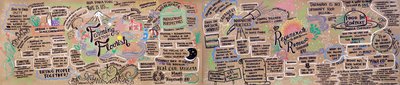
F2F was most importantly about how to educate people to farm. As a research group, they held 鈥渟ome great events around soil health, food security and food systems,鈥� Freeman recalls. He reports that the local Council is now more focused on food security, and Venture Taranaki is involved in a branching out programme on larger-scale food production. The Government is interested in Regen Ag and its connection to the organic sector.
As the sole operator, Smiley will move Frankley Farms into its fourth iteration in 2023. He鈥檒l maintain the farmer鈥檚 market stall and crop swap while contemplating a long-term vision.
Teaching the two WITT courses, Freeman reaches approximately 40 to 50 students a year, who range from 17 to 70 years old. He has a lot of community connections this way and hopes to help create more courses in the future as WITT integrates with Te P奴kenga.
As tauiwi, when asked about m膩tauranga M膩ori from a producer鈥檚 perspective, Freeman says that m膩tauranga 鈥渃omes back to commonsense鈥� for him: the 鈥渟cience aligns with m膩tauranga M膩ori in horticulture.鈥� He incorporates whanonga pono and m膩tauranga into everything he teaches. His classes begin with a karakia emphasising kotahitanga ki runga, ki raro, ki roto, ki waho 鈥� unity above, unity below, unity within, unity within the world 鈥� the vision of small-scale, regenerative, sustainable, local, communal farming.
Freeman reflecting further on his practice and teaching in this kaupapa, reminds us, 鈥淗orticulture is not rocket science. It鈥檚 much more complicated.鈥�
Research funders
Bashford-Nicholls Trust Pivot Award
UN Sustainable Development Goals
Related content