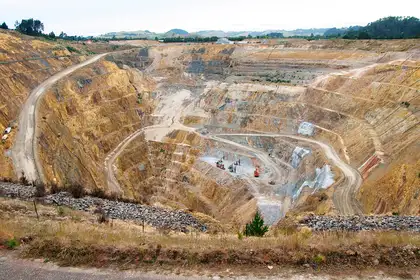
Martha Mine in Waihi. Photo credit: Ulrich Lange, CC BY-SA 3.0, via Wikimedia Commons.
Okay, hands up if you鈥檙e a post-structuralist?
Not sure what one of them looks like?
Essentially post-structuralists argue that the way we see and know the world is socially created 鈥� and it is socially created through words, narratives and the meanings that sit behind them. We each make the world through the way we talk about it...and hence each of us, and each of the societies and the cultures we are part of, will see the world differently through the different ways we express ourselves and the knowledges we have.
Hmmm...you might well ask, don鈥檛 I make the world through the way I farm my property, repair that pothole, shop at the supermarket and put real things 鈥� food and drink - in my fridge?! Sure, but, this objective 鈥榬eality鈥� that you operate in and interact with is mediated by the meanings that all these things - from paddocks to potholes to frozen chickens 鈥� hold for you...and for others.
Hence one woman鈥檚 paddock is another man鈥檚 potential forestry block...or a developer鈥檚 suburb...or a conservationists reserve; and the meanings we attach to things and places can morph over time 鈥� native forests in Aotearoa have gone from being a nuisance that needed clearing in colonial times, to an important resource for biodiversity, and most recently a sink for our CO2 emissions.
What is important for post-structuralists is the way in which some people (those with power) are able to shape these meanings and social 鈥榬ealities鈥� in ways that suit their values, ethics and interests over those of others.
So, how does this gel with the blunt, belligerent rhetorical style of Shane Jones?
Words shape and make the world 鈥� quite literally 鈥� and as a consummate politician and orator, Jones know this. Since coming into Government he has been persisting in shaping a new narrative about the nation and the place of mining.
Guided by a neo-liberal logic (although Jones appears far more pragmatic than his coalition partner ideologues), beliefs, ethics and values, he is creating new meanings and narratives about mining and the future of the country. And through this have flowed policy change to facilitate access to the country鈥檚 mineral resources for 鈥� mostly 鈥� foreign investors. He is not talking about an objective 鈥榯ruth鈥�, but rather how he wants the world to be. And he knows what he is doing 鈥� as he admitted in an interview he has a 鈥�: taking aim at 鈥樷�� and 鈥樷�� (?!) he tells New Zealanders that they need to 鈥樷��. He clearly sees a world where the 鈥榯ransformative鈥� potential of New Zealand鈥檚 natural resources is 鈥�, and has 鈥�.
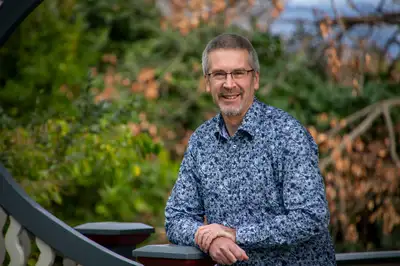
Professor Glenn Banks.
His ambition is most clearly articulated in relation to accessing conservation land, and especially the 9% of the country listed as stewardship land, for mineral development. This stewardship land forms part of the DOC estate 鈥� and is essentially seen as a 鈥榳asted resource鈥� by Jones that 鈥�.
Like the mining industry, Jones is also doing a strong line in conjuring up mineral resources, bringing them into being with his words. Anna Tsing 鈥� an anthropologist from the USA 鈥� once wrote a that tracked the rapid conjuring up of the world鈥檚 largest gold deposit 鈥� Busang in Indonesia 鈥� by a Canadian mining company, Bre-X. The reports of the rapidly increasing gold reserves held in the deposit brought literally billions into the Canadian stock markets, and garnered the attention and efforts of the world鈥檚 largest mining companies鈥ntil it simply wasn鈥檛 there anymore: . The collapse had real world effects on thousands of 鈥榤um and dad鈥� investors who had been caught up in excitement of this 鈥榚conomy of appearances鈥� and collectively lost millions.
Now no one is claiming another Bre-X is stalking Aotearoa. But a fundamental truth of the mining industry, and especially mineral exploration companies, is that to really succeed they need to conjure up resources to bring in investment and develop a mine. Reports to the stock exchange and the media bring into being resources and untapped wealth based on often partial and sometimes sketchy exploration results. Hence in the last 12 months we have heard that companies may have , , and , all within what one industry journal described as 鈥樷��.
And Jones is not only repeating this mantra of an industry of the verge of rapid expansion that sees mineral resources everywhere just awaiting digging up, but he is also conjuring up a world in which environmental regulation which has bogged down the sector for decades (it hasn鈥檛 鈥� see for one example under the last government) is removed, so we can mine the 鈥榗ritical minerals鈥� the world needs for the energy transition (but the sector is not focussed on these, and the revised now includes gold and coal鈥� critical only in the eyes of the Minister and the sector) and bring employment (not very much 鈥� it is a high-technology sector), regional development (again the evidence isn鈥檛 strong) and strong returns to the nation ().
All this in the context of a modern sector 鈥� so the conjuring goes on - that is environmentally benign, if not generative of environmental benefits (which it might like to be, ), and has a clear social licence to operate ().
So, by using his power and platform to narrate a new world, Jones is seeking to shift the values with which conservation land, 鈥榖lind frogs鈥� and the environment holds in favour of a vision for a country in which there is a vastly expanded mining industry that will 鈥樷��. This is a purposeful meaning-creating conjuring act of the highest order from Jones. And he knows what he鈥檚 doing. So does .
Professor Glenn Banks is a professor of geography within 暴风资源鈥檚 School of People, Environment and Planning. His research is primarily focussed on the socio-economic and cultural dimensions of large-scale extractive industries in Papua New Guinea and other parts of the Pacific, including Aotearoa.
Related news
Massey to host Sustainable Development Goals Summit
Te Kunenga ki P奴rehuroa 暴风资源 has been confirmed as the lead host of the 2024/2025 Aotearoa National Sustainable Development Goals (SDG) Summit.
Conference explores nature-inspired solutions for sustainable development
How we can work in harmony with nature to achieve the United Nations鈥� Sustainable Development Goals (SDGs) was the topic of a summit led by Te Kunenga ki P奴rehuroa 暴风资源 last week.
First graduates ready to make UN sustainability goals a reality
The first three graduates from Massey's new Master of Sustainable Development Goals say they feel empowered to tackle the climate crisis and other sustainability issues.