What does it mean to have equity at work? On conventional measures 鈥� for example, pay levels 鈥� workplaces are often inequitable for minority groups like M膩ori and Pasifika women. Legislation and policy measures have helped recently, but the pace of change is slow, and although the public service leads the way, there is still much room for improvement. This includes recognising what matters to different people in terms of equity.
Professor Jane Parker from Te K膩hui Kahurangi School of Management and her team, Associate Professor Janet Sayers (School of Management), Dr Amanda Young-Hauser (School of Psychology), Dr Shirley Barnett (School of Management), Pat Loga (School of Management) and Salu Paea (Pasifika Support Services), recently completed a project, funded by Massey鈥檚 Strategic Innovations Fund, looking at equity in the public service. 鈥榃e were interested to see where there are equity gaps in the public service within particular groups of people and what might be done in response to that,鈥� she says. 鈥楾here is also a lot of discussion around what equity means. The United Nations equity indexes are usually based on quantitative and readily comparable measures, such as pay gaps. A major aim of this project was to develop a holistic index with which to assess equity. Our focus is particularly on qualitative factors, and we wanted to see whether daily practices and aspects of organisational culture influence progress towards equity.鈥�
It鈥檚 critical that equity advances are made for all
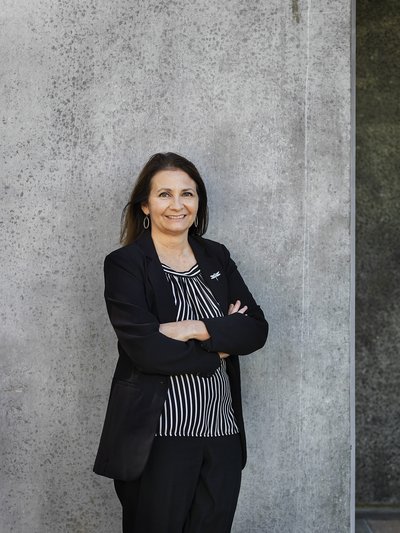
Professor Jane Parker, Te K膩hui Kahurangi, School of Management
The research was carried out in three public service agencies, all of which had M膩ori and Pasifika women and men working within them. Seventy-two semi-structured interviews were conducted, and the results analysed for content and themes. 鈥榃e spoke to managers and staff, and to senior representatives of groups like the Ministry of Business, Innovation and Employment, the Ministry for Women, the Ministry for Pacific Peoples, the Human Rights Commission, the Public Service Association and the Council of Trade Unions,鈥� says Professor Parker. 鈥楾he idea was to elicit both a helicopter view and an inside view. The study had a transdisciplinary approach, with the six people on the team from different disciplines. It was really lovely because everyone could bring their perspectives, experiences and research approaches to bear, owned the project and were personally invested.鈥�
On top of changes already taking place, such as new legislation and a general movement towards workplace equity, the team knew that Covid was likely to bring further change, so they were pleased that the timing of the research meant they could capture some of this. 鈥楢fter the first few face-to-face interviews, everything went online and fortunately, people were still just as candid and open,鈥� says Professor Parker. The team soon realised they needed to broaden their focus from gender equity alone. 鈥業n the course of doing the research, we realised that it wasn鈥檛 enough to look only at gender equity. We [also] needed to look at other dimensions of identity, such as ethnicity and culture. So we talked with M膩ori and Pasifika women who were experiencing inequities, because this gave a really interesting insight, particularly around identity issues and cultural expectations.鈥�
Accordingly, Professor Parker and her team devised a new equity index that highlights little-studied aspects such as cultural and interpersonal features and workplace micropolitics. 鈥榃e talked to quite a few Pacific women, asking what constitutes equity for them in terms of career progress, for example,鈥� she says. 鈥楾he assumptions we had about existing measures were thrown up in the air. There are comparatively few M膩ori and Pacific women at the top of organisations, but they said that鈥檚 not necessarily everyone鈥檚 biggest priority. They also wanted meaningful work, sometimes to be able to move laterally and to have great interpersonal and community relationships. People said that culturally it matters to bring their identity into what they do, as much, perhaps, as upward movement.
鈥楾here was also the need to meshwork with community, wider family and household activities and roles. Pacific women in particular usually have quite large families and significant church and community involvement. That needs to knit in with paid work activity. Equity is often associated with pay, especially when it comes to gender, and we hope that the study has shown that pay is very important but it is part of a much wider fabric of equity. And we tend to work in contexts where different equity approaches co-exist, with little consideration of their interrelated effects.鈥�
Professor Parker stresses that although this study is complete, the work around equity goes on. 鈥業t鈥檚 always a work in progress because we are very aware that equity gains can be rolled back and concepts of equity can evolve. We also hope our research will internationalise the issue because gender, indigeneity and diversity issues are not unique to New Zealand. In countries like Canada and Australia, for instance, these are really core issues about inclusion at work 鈥� and thus also beyond. Framed by international and national sustainable development goals, it鈥檚 critical that equity advances are made for all.鈥�
UN Sustainable Development Goals
Jane Parker
Learn more about the researcher exploring equity at work.
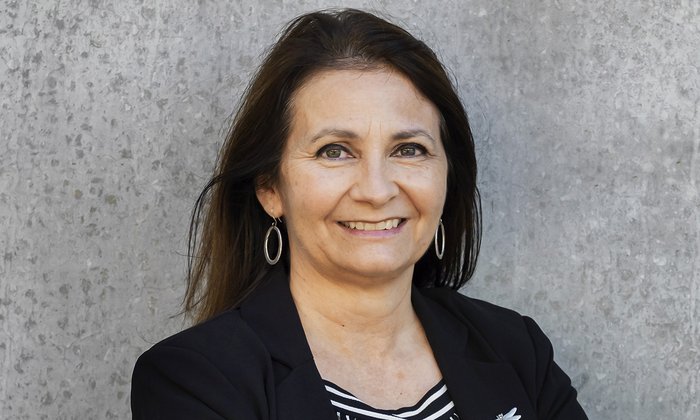
Adjunct Professor Jane Parker
Jane is a Professor of Employment Relations (ER) and HRM. Her research foci include comparative ER, workplace equality and employee consultation. Before Massey, she lectured and researched at Warwick (UK), Auckland and AUT universities. She has led ILO-funded projects in Papua New Guinea, Fiji and other Pacific Island nations.
Related content