Born in South Africa under the apartheid regime, Professor Bruce Glavovic from the School of People, Environment and Planning has focused his career on environmental justice, sustainability and human rights and peaceful, constructive ways of solving problems. ‘I have worked with communities all my life; I learn from them and provide support where I can,’ he says. ‘An important question is, how do we make public choices in ways that are enabling and empowering?’
For most of his career, Professor Glavovic has focused on coastal management, leading the team that produced South Africa’s post-apartheid coastal management policy, which was described as a world first. He has also worked in natural hazards planning and in adapting to climate change, both of which are interwoven with other crises, including biodiversity loss, inequity and injustice, and efforts to ensure that public decision-making is inclusive and enabling. ‘Recently, my underlying critical scholarship has centred on what drives people into positions of vulnerability and marginalisation, and what can be done through empowering processes in a world of climate change and risk,’ he says. Currently, he is finishing a significant piece of work for the United Nations Educational, Scientific and Cultural Organization (UNESCO) focused on community-based coastal hazard risk reduction. ‘Essentially, it is a workbook for communities around the world to use to make enduring decisions about how to deal with this risk.’
Do we do science as usual, or do we need to do something more radical?
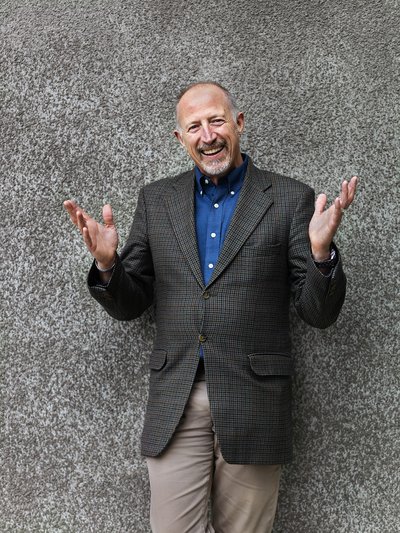
Professor Bruce Glavovic, School of People, Environment and Planning
Professor Glavovic also works with the Intergovernmental Panel on Climate Change (IPCC), the UN body whose main brief is to prepare reports assessing the science related to climate change. ‘Our recent Working Group II report has strong statements about enabling governance, the importance of overcoming inequity and injustice, human rights, the voice of indigenous people, and non-human species,’ he says. The report concludes that decisions made in the coming 10 years will determine medium to long-term climate change risk, and hence the imperative for urgent local/global action.
Professor Glavovic is concerned that the pace of climate change action is too slow. He has recently published a paper, ‘The Tragedy of Climate Change Science’, which draws a sobering conclusion. ‘If we continue on the present path, we condemn the world to a dangerous climate future,’ he says. ‘Temperatures will reach well above pre-industrial levels, there will be species loss, and we will experience dramatic increases in intense and more frequent extreme events. Do we have another six to seven years to prepare another IPCC assessment report while governments make incremental moves that see global warming levels continuously rise? If we are going to take the IPCC evidence seriously, we need to decide: do we do science as usual, or do we need to do something more radical?’
Given the urgency and criticality of climate change, Professor Glavovic argues the time has come for scientists to agree to pause climate change research as a means to first expose, then renegotiate, the broken science-society contract. ‘We’re suggesting a moratorium on the science that merely documents the decline of human wellbeing and planetary health. That science is not contributing to solutions. We need to continue working with our local communities whilst at the same time mobilising global action in this closing window of opportunity to avert dangerous climate change.’
This research is crucial for local communities. ‘I’m involved in case studies within Manawatū-Whanganui and Taranaki working with mana whenua and communities that are exposed and vulnerable,’ says Professor Glavovic. ‘It’s around how to empower people. Unless you address the drivers and root causes of climate vulnerability – for example, if you don’t understand the colonial context in relation to Māori and its ongoing effect on relationships with local government – it makes it very difficult to address the realities tangata whenua face.
Science can provide technical risk-analysis tools that give detailed, quantifiable information about what the problem is and how to deal with it, but it doesn’t address the structural drivers. My critical action-oriented research helps to reveal those problems and find ways to try to overcome them.’
As part of this endeavour, Professor Glavovic is working with a group of trustees who are mana whenua to a piece of land on the Waitara River in New Plymouth. The land is facing flood risk, coastal erosion and intensified storms. ‘People are having to move out, and they have urupā and rare important taonga that are at risk, as well as people’s wellbeing and livelihoods. They have developed a partnership with local government and there is real commitment to supporting them. We are working together to develop an adaptation plan.’ In a similar way, he is working with a community at Tangimoana, where there is a grave flood risk. ‘Manawatū District Council is committed to doing something about it, and we’re going to help shape the plan. Rangitāne and other iwi and hapū have an important voice there. It’s exciting and humbling work because it can make a difference.’
UN Sustainable Development Goals
Bruce Glavovic
Learn more about the researcher empowering local communities to find solutions to prevent dangerous climate change.
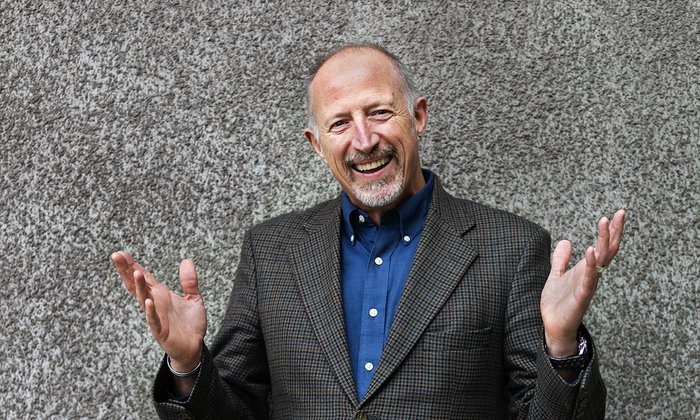
Professor Bruce Glavovic
Bruce has a multi-disciplinary education, with degrees in economics and agricultural economics, environmental science, and urban and environmental planning. His research focus is on coastal communities and the role of environmental planning and conflict resolution in bridging science-policy-practice interfaces to reduce disaster risk and build resilience and sustainability.
Related content