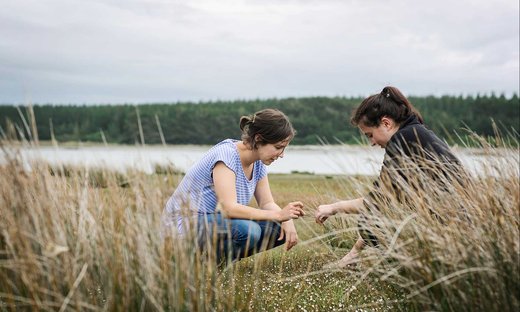
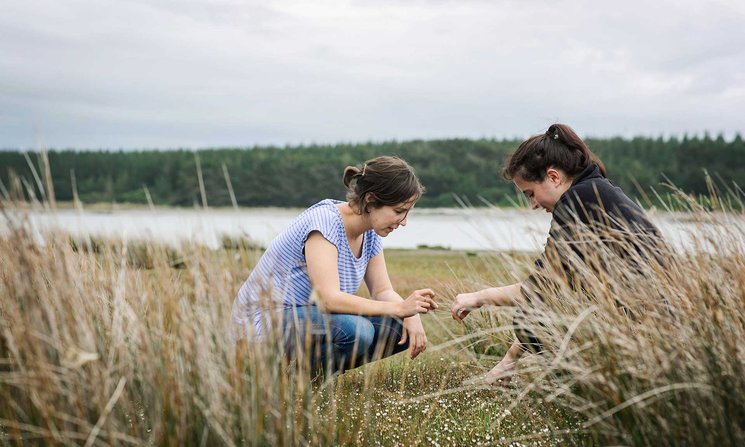
In 1972 to 1974, the lower Ōhau River was diverted as part of a flood protection scheme to allow coastal farmland to be developed and benefit upstream Pākehā farmers. Whilst a hapū-led coastal land development at that time, this had eventual devastating effects on the Te Hākari/Te Hakiri wetland, situated in Kuku, Horowhenua, adjacent to the estuarine foreshore between Waikawa and Ōhau townships. This development encompassed the Ōhau River loop, a meandering tidal section of river that was once a highly valued mahinga kai (food-gathering area) for īnanga (whitebait), kanae (mullet) and tuna (eels).
Over the past 25 years, Professor Huhana Smith, Head of Whiti o Rehua School of Art, has been involved with kaitiaki of Ngāti Tukorehe in the protection and restoration of te taiao, the environment, including the coastal region, the Ōhau River loop and the back dune wetland, which now lies within a revitalised coastal forest. ‘As part of a core kaitiaki group, I was the conduit for more members of our iwi and hapū to get engaged in climate change action-oriented projects,’ she says. ‘This involves not only research but also our people taking action at the same time.’
We have everything at our fingertips to answer the problems that we face
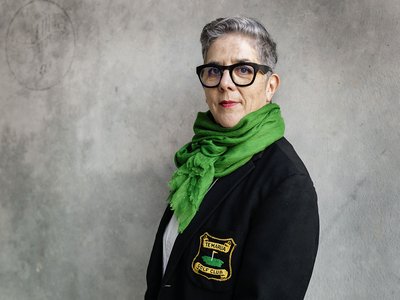
Professor Huhana Smith, Whiti o Rehua, School of Art
Since human settlement, and particularly since the arrival of Pākehā, New Zealand has lost some 90 per cent of its original wetland area, mainly to pastoral use and urban development. Wetland systems are rich in biodiversity, and the work in Te Hākari/Te Hakiri has shown that the land has significant ability to regenerate itself once water is returned. ‘If harakeke used to grow in a wetland system that was depleted by grazing and drainage, it’s amazing how the seeds remain in soil for a long period of time,’ says Professor Smith. ‘If you bring them to the surface (as we did when creating more volume for water in the wetland), they’ll create great stands of harakeke. It gives you the sense you can do a lot of human intervention to put te taiao back in place, but if you also return water to where it should be, it’s going to replenish itself because the seeds are already there. We’ve learnt that wīwī, or reed systems, will also come back without having to do any planting; you just have to return the water.’
Professor Smith has spent many years restoring the Ōhau River loop. A particular challenge in this area has been dealing with invasive hornwort, an aquatic weed that inhibits the development of tuna by deoxygenating water and encouraging the proliferation of other pests, such as snails. ‘The plant only needs a little bit to make it grow again,’ says Professor Smith. ‘It’s a very successful plant in the wrong place.’
A major issue in the river loop is that it was segmented by the formation of paddocks, farm tracks and flood protection engineering to create and maintain farmland. ‘There is a need to put the culverts back in underneath the farming tracks to open the loop up so it is a bigger water system,’ says Professor Smith. ‘Īnanga were once in abundance, and they became adult fish further upstream, so there is a significant loss of that biodiversity. On the seaward side of the river diversion, there is a large spawning ground, and people fish around that part of the Ōhau River. There is a need to put sedimentation ponding systems or constructed wetlands in; if we get the water back in, the reeds will colonise that space. It is an example of a deeply inculcated climate change strategy that can enable our people to feed themselves well with īnanga, but also enhance the stock.’
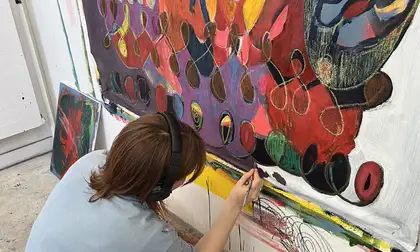
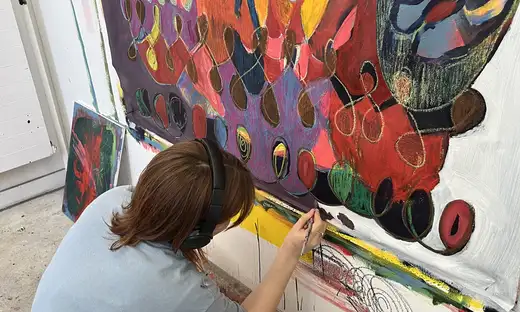
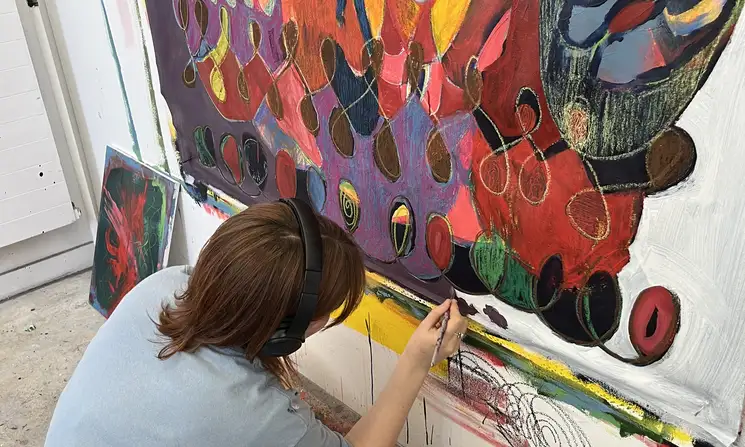
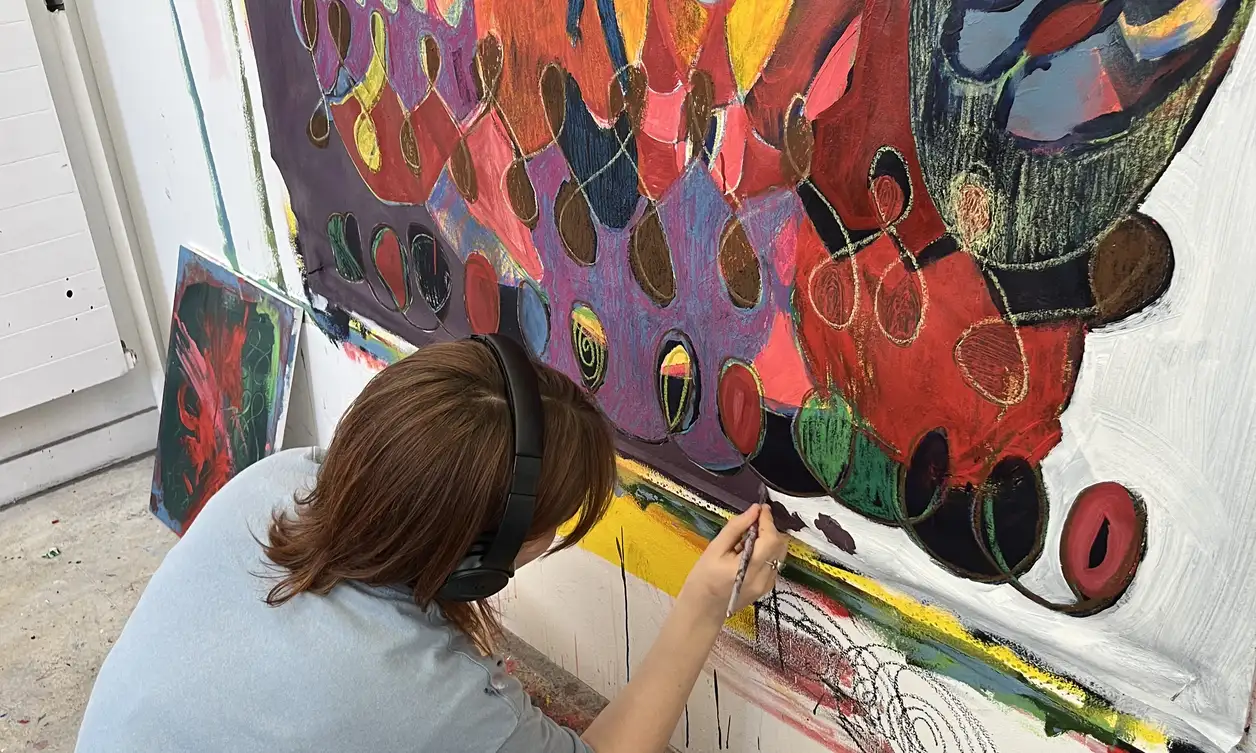
Professor Smith, who is also an artist, is part of Te Waituhi ā Nuku: Drawing Ecologies, a group of national and international artists. The group aims to use extracted willows and other prunings from the Ōhau River project to make biochar, which can be returned to the whenua and also used for drawing. The group has been experimenting with biochar for filtering water in the Waikōkopu Stream, which flows by Professor Smith and her partner’s olive grove and orchard in Kuku. Another material that is being used from the river area is muka, the extracted thread from harakeke that is ideal for making cloaks. ‘This is the most sustainable fabric you could possibly have in Aotearoa,’ says Professor Smith. ‘There’s no chemical softening involved; it is all about water and harakeke. I’m working within a project led by Drs Rangi Te Kanawa and Faith Kane [Textiles, ±©·ç×ÊԴ], who are aiming to get muka through wool-processing machinery so that we can spin it, weave with it, and make fabric for clothing.’ Another harakeke project, led by Angela Kilford (Textiles, ±©·ç×ÊԴ), is all about making and using natural dyes for muka according to Māori methods and knowledge.
‘All of our collaborative work for collective benefit scaffolds on the next; we just keep building on each project and what we learn. When I get excited about something, I try to convince people that they need to play the game with us. That’s what artists do: they can see things that maybe other people don’t see as easily. It’s been years of passion about returning the benefits of nature, as, especially in the last 40 years, humanity has pulled itself away from nature. From a Māori worldview, te taiao is an interrelated and interconnected realm, so all our research has to be connected to people and the environment and be based on a mātauranga Māori knowledge of place. Everything we do positively for te taiao, whether it’s a waterway health or climate change project, is to return resilience back into the whenua and the river, stream and wetland systems. An important part of this work is that we’re literally stitching together what agriculture has pulled apart, what science thinking has compartmentalised, and what the legacy of land fragmentation and alienation from hapū has done. This is years of work, of our Ngāti Tukorehe people trying to envisage another future, and it’s homing in on ancestral intelligence. Our people once lived very healthy lives based on sustainable food gathering, garden growing, and being engaged in and using ancestral Māori knowledge. We have everything at our fingertips to answer the problems that we face.’
UN Sustainable Development Goals
Huhana Smith
Learn more about the researcher restoring te taiao by the Ōhau River.

Professor Huhana Smith
Huhana is a visual artist, curator and researcher who engages in major environmental, trans-disciplinary, kaupapa Māori and action-research projects. She fuses creative arts, mātauranga Māori and scientific methods to actively address climate change concerns and explore complex environmental issues and accessible solutions for Iwi/hapū and wider communities, particularly in Horowhenua-Kāpiti.
Related content