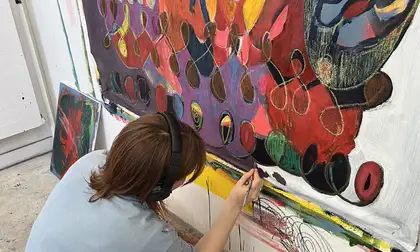
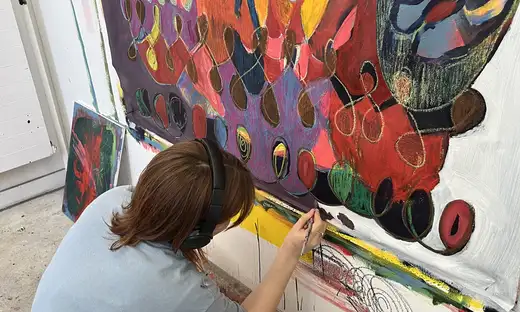
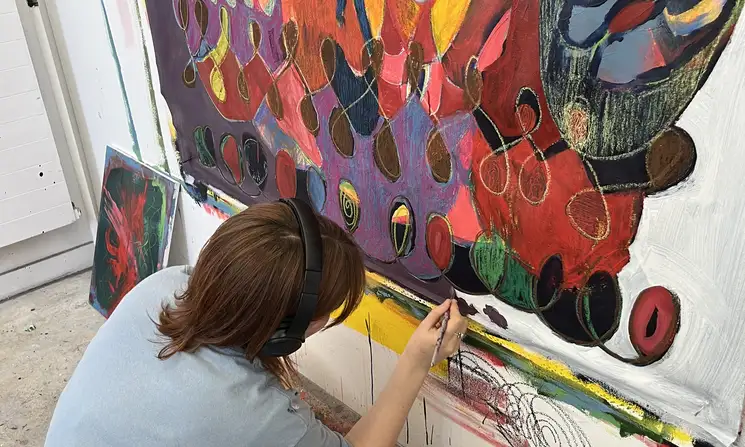
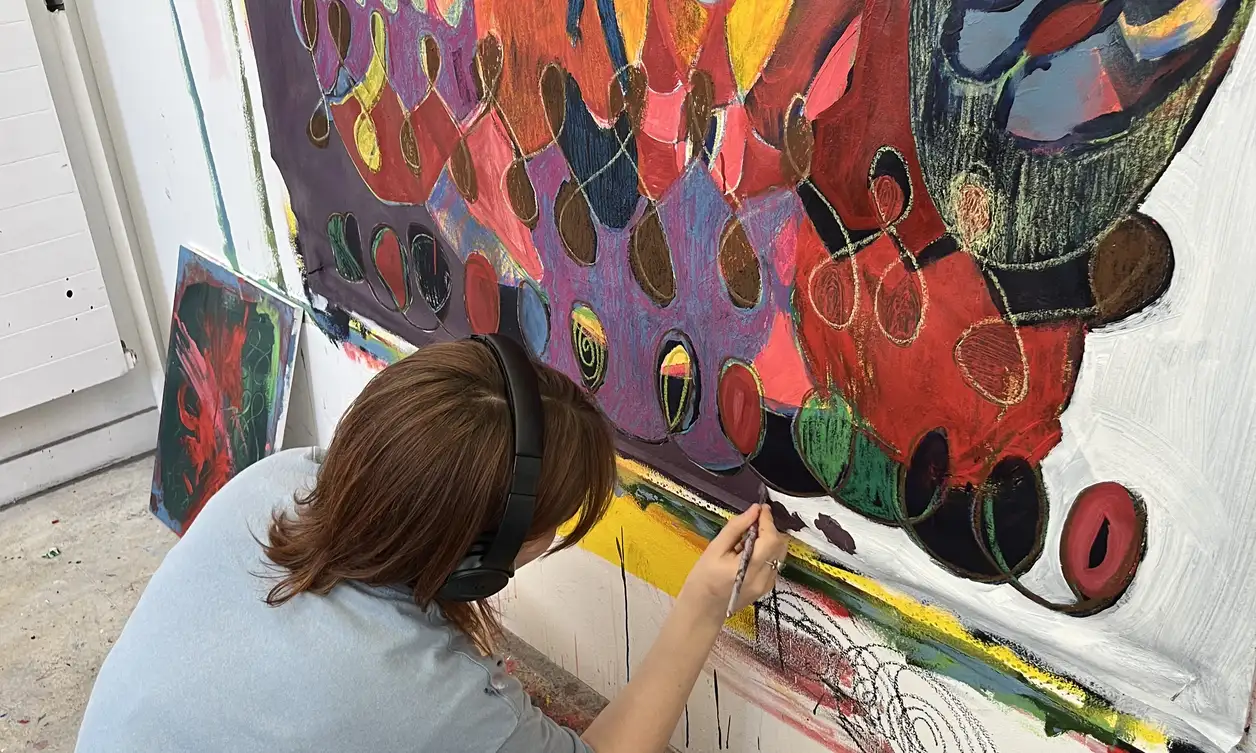
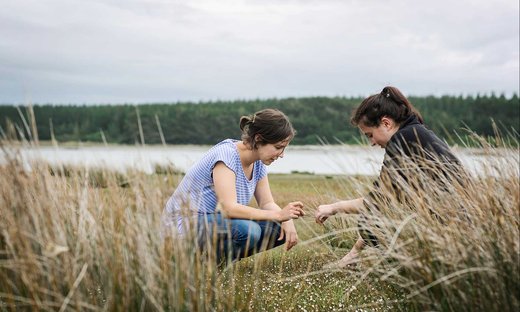
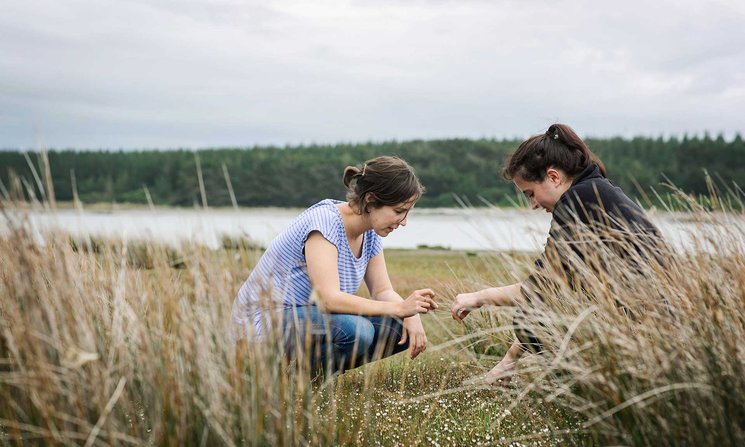
Dementia refers to a group of conditions that cause a decline in cognitive abilities severe enough to impair daily life and independent function. They also affect behaviour, feelings and relationships. Many conditions that cause dementia are progressive, but treatments, including behavioural ones, can help alleviate some symptoms and preserve function for longer. One example is art therapy, a group of techniques that can be used to improve the health and wellbeing of individuals living with dementia. Many people with the condition lose communication skills, and art allows expression in a different way.
Drawing is a wonderful way of communicating differently
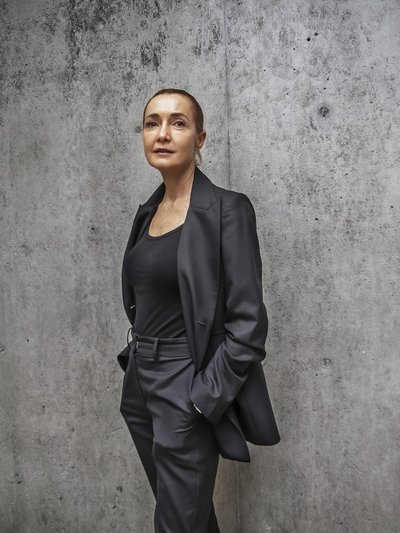
Emma Febvre-Richards, Whiti o Rehua, School of Art
Developed as a partnership between Emma Febvre-Richards from Whiti o Rehua the School of Art and the Institut Claude Pompidou in France, MinDArT is a project that involves the development and testing of an eight-week material and digital drawing programme for people with dementia and their supporters. The primary aims of the programme are wellbeing, mindfulness and relaxation, as well as maintaining fine motor skills and communication.
The project explores the idea that in dementia, fine motor capabilities are retained longer than verbal abilities, and that drawing gives an opportunity for those with dementia to express themselves in a medium that isn’t oral. ‘As an artist, I was really aware that drawing is a different way of thinking for me,’ says Febvre- Richards. ‘If your communication is starting to diminish, then drawing is a wonderful way of communicating differently.’
MinDArT sessions begin with relaxing exercises, then move into drawing exercises and finally a digital app. ‘The programme is inspired by nature, because it makes us feel good,’ says Febvre-Richards. ‘If you think about the elements of nature, whether that be sunshine or wind, it engages all the senses.’ The programme includes the use of sound, with the team working with sound artists to take inspiration from the seasons, like leaves or wind. The drawing itself uses repetitive gestures, which Febvre-Richards explains is intrinsically relaxing. ‘If you think about sewing, knitting or gardening, they are also repetitive movements.’
The digital applications of MinDArT are designed to continue what has been explored as hand-eye coordination and spatial awareness, and are designed to result in versatile outcomes – there is no fixed answer,’ Febvre-Richards says. ‘They are designed to be easy to use and culturally inclusive, as patterns are made by placing marks spatially. I am conscious of us giving choice in what is available so that anyone who participates in our programme can find their own way and reference their own cultural background.’
The open-ended nature of MinDArT sessions is one of their major drawcards for people with dementia. ‘What’s really good with drawing is that there isn’t a right or wrong. Art has this ability to give many results, which is fabulous for a person with dementia because they’ve had so much difficulty in their lives with not achieving like they used to with things that are difficult, and that takes that stress away.’
Febvre-Richards is now working with Dementia Wellington, Canterbury District Health Board’s Dr Susan Gee and Tracey Hawkes, and Auckland University’s Dr Gary Cheung to evaluate the effectiveness of MinDArT in areas such as participants’ wellbeing, communication and fine motor skills. The tablets from the programme are also being used by occupational therapists at Burwood Hospital’s dementia ward, and the New Zealand Spinal Trust is also interested in the programme as a possibility for pain management. ‘I think that MinDArT has a bigger life than people with dementia but our main focus is people with dementia and their supporters,’ says Febvre-Richards.
MinDArT is part of a group of three projects Febvre-Richards is involved in, which together are known as MeDArT. Like MinDArT, the two other projects also use science, drawing and technology to advance dementia research. Draw Me an Odour, for instance, is a transdisciplinary project with Université Côte d’Azur to develop a deeper understanding of the links between smell, colour and gesture. Participants are asked to identify a colour that corresponds to the odour they are smelling; they will also complete a questionnaire that explores familiarity, intensity, relaxing effects, context and memory. ‘We’ve been testing that around the world with people who aren’t cognitively impaired to see how we can use it for those with cognitive impairments,’ says Febvre-Richards. The idea is that olfactory stimulations could be applied to promote better performance, concentration, recall, autonomy and flexibility in daily tasks. She currently has an exhibition on this topic at the Musée International de la Parfumerie in Grasse, France.
Finally, Febvre-Richards is involved in Graphe, a study of digital drawing to help identify early markers of Alzheimer’s disease and certain other dementias. ‘One of the hardest things with dementia is getting an early diagnosis,’ she says, ‘but it’s really important to be diagnosed early because then you can start to get a plan in place and think about activities that can maintain capabilities for as long as possible.’
UN Sustainable Development Goals
Emma Febvre-Richards
Learn more about the artist and researcher who is using art and science to help with dementia.
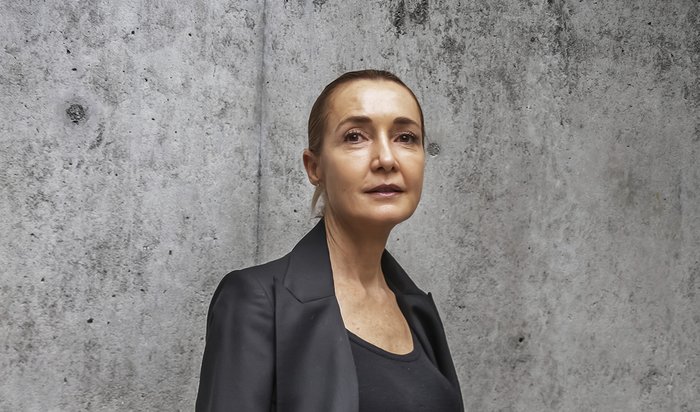
Associate Professor Emma Febvre-Richards
Emma is an artist whose research is in the expanded practice of drawing. Engaging ‘Drawing is Thinking’ to combine traditional mediums of rendering with advanced technology and other disciplines (sound and neuroscience) to explore how codes of our environment, culture and art creation inform and influence brain function, memory and experience. She is a co-founder of Drawing Open.
Related content